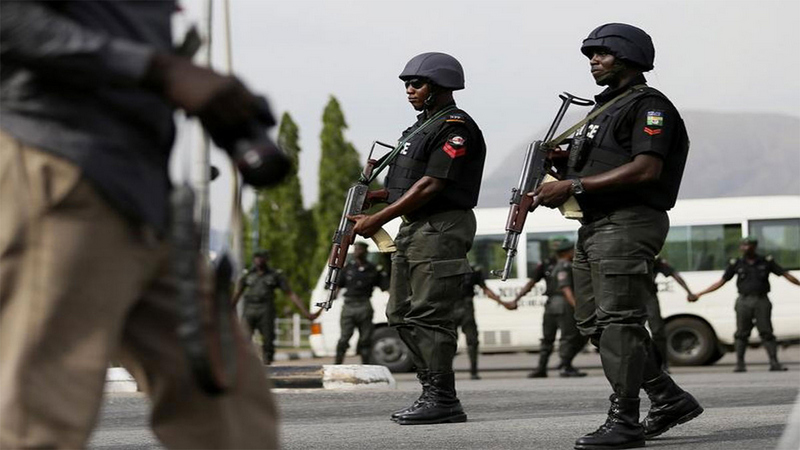
The Delta State Police Command says it has massively deployed officers and put in place all necessary security measures to ensure a peaceful and hitch-free Easter celebration.
This was contained in a statement signed by the police public relations officer for Delta State Command, Superintendent of Police Bright Edafe, copies of which were made available to journalists in Warri on Friday.
The statement said, ”The Command has deployed personnel strategically to churches, event centres, highways, recreational spots, and other public places, while tactical teams and patrol units have been positioned across the State to deter crime and respond promptly to any security concerns”.
Also, the State Commissioner of Police, Yemi Oyeniyi, has directed all Area Commanders, Divisional Police Officers, and Tactical Commanders “to intensify visibility policing, sustain intelligence-led operations, and maintain a high level of alertness throughout the festive period.”
In an earlier meeting with Area commanders, the Commissioner of Police directed that they work with religious leaders in the Area of responsibility, and be in close communication with them during the Easter period and beyond.
The CP further charged officers to remain professional, courteous, and respectful in their interactions with members of the public.
The command urged residents to remain vigilant, security conscious, and to promptly report any suspicious persons or activities to the nearest police station or through the Command’s Control Room Number: 08036684974.
Parents and guardians were also advised to keep a close watch on their children and wards during the celebrations.
While wishing all Christian faithful a peaceful, hitch-free and happy Easter celebration, the commissioner of police reiterated the command’s commitment to the protection of life and property and called for continued cooperation from the public in maintaining peace and order across the state. (Punch)
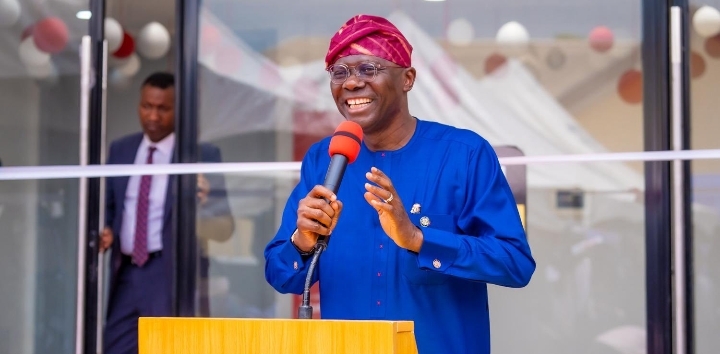
Lagos State Governor, Babajide Sanwo-Olu, on Thursday announced a N200 million support package for autism advocacy and caregiver development, as 16-year-old autistic cyclist Kanyeyachukwu Tagbo-Okeke added another Guinness World Record to his achievements.
The announcement was made at Lagos House, Marina, during an event marking World Autism Awareness Day 2026.
Kanyeyachukwu was celebrated for completing a long-distance cycling journey that began in Enugu on March 14.
Sanwo-Olu said N100m would go to autism-focused organisations under the Lagos State Office for Disability Affairs, while the remaining N100m would support the Kanyeyachukwu Foundation.
“I will give N100 million to all autism-focused groups under LASODA and an additional N100 million from the Lagos State Government to the foundation. This is not just about one child. It is about using this platform to touch many others who do not have the same opportunity.
“We must train and develop real caregivers with the knowledge and skills required to support our children with special needs. Once we do that, half of the problem is solved,” the governor added.
He described the funds as initial support to strengthen advocacy, expand care access and train professional caregivers.
During the event, a Guinness World Records representative certified Kanyeyachukwu as the youngest person to cycle 100 miles, adding to his record last year for the largest painting on canvas unveiled in Abuja.
Sanwo-Olu commended the teenager for changing perceptions of autism.
“Your advocacy has helped many people to see autism not as a limitation, but as a different way of expressing and contributing to our world,” he said.
Kanyeyachukwu’s father, Tagbo Okeke, said the cycling journey passed through multiple states over 15 to 16 days without incident.
He thanked the government and other supporters for guidance and safety measures.
LASODA General Manager, Adenike Oyetunde, said the event highlighted the state’s commitment to inclusivity and improving the lives of people with autism.
“Impossibility is truly a myth. Our core responsibility is to protect the interests and needs of persons with disabilities. We strive to ensure Lagos State is truly inclusive, and our goal is to ensure that the lives of people with autism are optimised,” she said. (Punch)
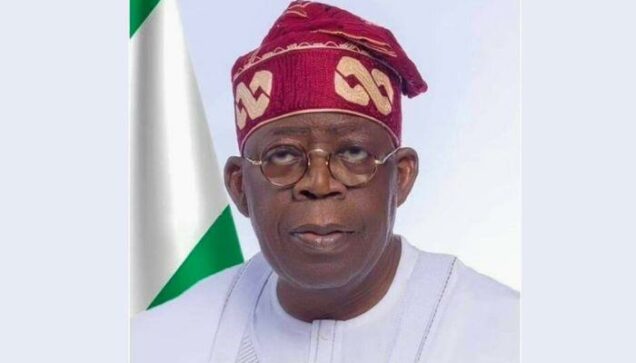
President Bola Tinubu, has announced the establishment of a special fund to support members of the Armed Forces, including injured personnel and families of fallen soldiers, as he marked his 74th birthday.
In a statement released on Sunday, the President said he had instructed the Accountant-General of the Federation to open a dedicated account for the initiative.
“On this my 74th birthday, I celebrate the valiant men and women of our Armed Forces,” Tinubu said.
He explained that the fund is intended to provide financial support for service members wounded in active duty as well as the dependents of those who lost their lives in service to the nation.
“Today, I have directed the Accountant-General of the Federation to establish a special account for a fund dedicated to those who serve, those wounded in the line of duty, and the families of those who have paid the ultimate price,” he stated.
Tinubu also pledged to contribute his personal earnings since assuming office as seed funding for the initiative.
“As a personal commitment, all my salaries since assuming office will be paid into this account as seed funding, irrespective of existing insurance and welfare schemes for members of our armed forces,” he said.
He further called on state governors, federal lawmakers, private sector actors, friends, and other stakeholders to support the initiative.
“I call on our governors, members of the National Assembly, the private sector, my friends and all well-wishers to support this initiative. Details of the account will be made available in due course,” the President added.
Tinubu stressed the importance of recognising the sacrifices made by military personnel and their families, describing the initiative as a duty rather than charity.
“We must never forget those who stand in harm’s way for our peace, nor the sacrifices borne by their families. This is not charity. It is duty. And we will fulfil it,” he said.
In the personally signed statement, the President also expressed gratitude to Nigerians for their goodwill messages on his 74th birthday, noting that he deliberately chose a subdued celebration.
He thanked citizens across the country for their prayers and support, saying such goodwill continues to strengthen his administration. (Leadership)
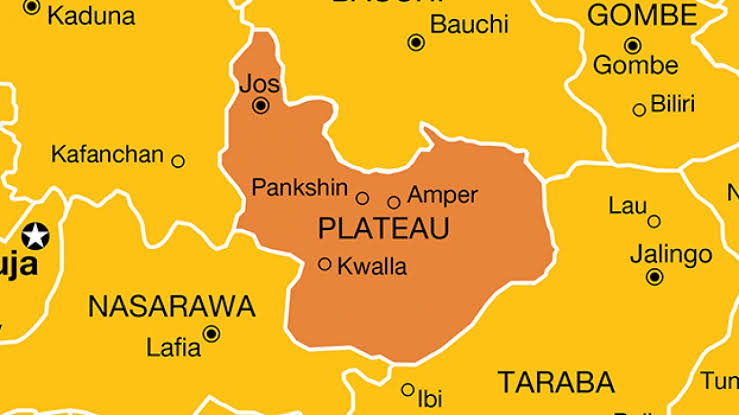
Plateau State Governor, Caleb Mutfwang, has confirmed that 28 people were killed during Sunday’s attack by gunmen in the Angwan Rukuba community, Jos North Local Government Area.
In a state broadcast on Tuesday, the governor, who had earlier visited the affected community and victims, described the attack as “tragic” and “senseless,” saying the perpetrators would not go unpunished.
Mutfwang said, “It is with a heavy heart and profound sorrow that I address you today, not only as your Governor but as your son and brother who shares in your anguish following the tragic security incident in Angwan Rukuba, Jos North Local Government Area, which occurred on Sunday, 29th March 2026. This unfortunate event led to the loss of 28 innocent lives and left many others injured.
“I feel deeply the weight of the pain inflicted on our people. The victims were law-abiding citizens going about their normal activities when the enemies of peace unleashed this senseless attack at about 7:30pm. As a government, we share deeply in the grief of the bereaved families and pray that Almighty God grants them, and the state, the strength, comfort, and grace to bear this painful loss.
“Despite this breach of security, I want to assure you that Plateau State will not succumb to fear or intimidation. We shall emerge stronger, united, and resolute in our faith and commitment to peace. We must deploy every available resource to defend our people, protect lives and property, and safeguard the territorial integrity of our state. Plateau shall remain strong and peaceful.
“Following the incident, the government took swift and decisive measures to restore order and prevent further escalation. In collaboration with security agencies, a 48-hour curfew was imposed on Jos North Local Government Area, effective from midnight on Sunday, 29th March to 1st April 2026. This measure allows security operatives to carry out thorough operations and ensure the safety of all residents. The curfew will be reviewed periodically to allow citizens to return to normal life.
“I personally visited the scene of the unfortunate incident alongside security chiefs to assess the situation and evaluate the extent of damage to lives and property. This visit has provided critical insights into strengthening our preventive measures against future occurrences.
“Furthermore, I visited victims receiving treatment at the Jos University Teaching Hospital. I am encouraged by reports that most are in stable condition. I wish to assure all affected families that the Plateau State Government will take full responsibility for the medical expenses of the injured. Rest assured, we stand firmly with you and shall continue to provide the necessary support.
“The government will also engage closely with the families of the deceased, community leaders, and stakeholders to ensure dignified burials for the victims, as well as provide support for their dependents.
“I am pleased to inform you that security agencies have apprehended a suspect who had earlier issued threats against the peace of our state. We are committed to ensuring that all those involved in this heinous act are swiftly brought to justice and prosecuted accordingly. This time, we shall pursue the cause of justice to its logical conclusion to ensure closure for the victims, their families, and, most importantly, the generality of the peace-loving people of Plateau State.”
The governor commended residents for their restraint and urged them to remain vigilant, reporting suspicious activities to security agencies.
He also directed security agencies to enforce the ban on commercial motorcycles within the Jos Greater Master Plan.
“At this juncture, I commend the community leaders, youth, and residents of Angwan Rukuba, as well as the wider Plateau populace, for their restraint and refusal to retaliate even in the face of provocation. Your maturity and commitment to peace are deeply appreciated.
“I urge all citizens to remain vigilant and to promptly report any suspicious movements or activities to the appropriate security agencies for swift action, as security is a collective responsibility. Let me assure you that every necessary measure is being taken to apprehend the perpetrators and safeguard lives and property across the state.
“In furtherance of our commitment to strengthening security, we have convened a State Security Council meeting to review and reinforce our security architecture, ensuring it becomes more proactive and responsive to emerging threats. Consequently, I direct security agencies to strictly enforce the law banning commercial motorcycle operators (Okada) within the Jos Greater Master Plan. The Commissioner of Police will issue detailed guidelines in this regard.
“On behalf of the Deputy Governor, the State Executive Council, and the peace-loving people of Plateau State, I extend my deepest condolences to all affected families. Our thoughts and prayers are with you. We also pray for the swift and full recovery of the injured.
“This tragic incident serves as a solemn reminder of the need for unity, vigilance, and collective responsibility. Let me reiterate the unwavering commitment of this administration to protecting lives and property and ensuring lasting peace across Plateau State.
“We shall continue to work closely with security agencies to restore calm, bring perpetrators to justice, and prevent any recurrence of such acts. I call on all residents to remain calm, law-abiding, and to resist any temptation to take the law into their own hands. Plateau State has long stood as a beacon of peaceful coexistence, and we must not allow the actions of a few to destroy the harmony we have built over the years.
“I urge community leaders, youth groups, religious leaders, and all stakeholders to partner with government in promoting dialogue, tolerance, and mutual respect. Together, we will overcome these challenges and build a more peaceful, secure, and united Plateau State.
“May God comfort the bereaved, heal the injured, and grant our dear state enduring peace.
A deadly attack by armed bandits disrupted a wedding celebration in Kahir village, located in Kagarko Local Government Area of Kaduna State, leaving at least 13 people dead and several others abducted, while scores of others were injured.
Police authorities in the state have confirmed the incident, saying that they are still gathering full details, including the number of abducted victims.
According to a community leader, Musa Adamu, the incident occurred around 11:47 p.m. on Sunday.
He said the attackers, who arrived in large numbers and were armed with sophisticated weapons, stormed the venue and began shooting indiscriminately at guests inside the hall.
Several attendees sustained gunshot injuries and were rushed to the General Hospital in Kagarko, while those with more critical wounds were referred to facilities in Kaduna.
Residents said the gunmen operated for nearly an hour without resistance. During that time, they reportedly looted nearby shops, making away with food items, provisions, and drugs from a local chemist.
A manhunt for the attackers has also commenced with a view to arresting them and bringing them to justice, according to Police authorities.
Kaduna is one of the states in the North-West that has been under the siege of gunmen known as bandits.
Other states include Sokoto, Kaduna, Kebbi, Zamfara, and Katsina.
Apart from bandits, another terror group – Lakurawa – has been blamed for many of the attacks on communities in parts of Kebbi and Sokoto states.
Its members stage raids from their forest base, rustling livestock and imposing “taxes” on locals.
The Federal Government, in collaboration with the United States military, carried out an air strike in Sokoto last Christmas that had targeted members of the group and “bandit” gangs.
Nigeria is also grappling with other armed groups that have compounded its security challenges in the north of the country.
Military crackdowns have yielded few results.
The conflict has spread to neighbouring Niger, Chad, and Cameroon, prompting the formation of a regional military coalition to fight these groups.
But the coalition has lost steam in recent years after the withdrawal of Niger due to a diplomatic spat with Nigeria following a 2023 military coup in Niger.
Earlier this month, the United States began deploying troops to Nigeria to provide technical and training support to the country’s soldiers in fighting the jihadist groups.
The US Africa Command said 200 troops were expected to join the deployment overall. (Channels)
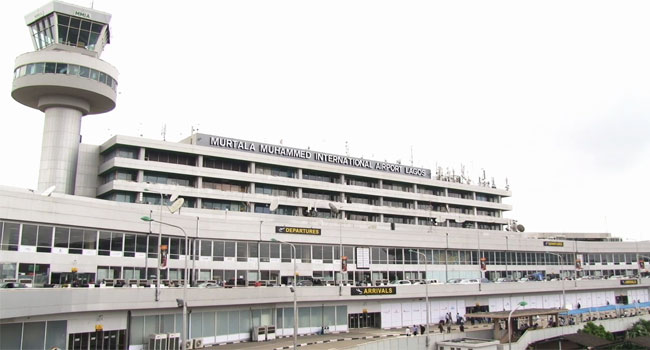
The Airport Police Command has intercepted a 14-year-old stowaway at the Murtala Muhammed International Airport (MMIA), Lagos, on Monday.
The police explained that the minor was discovered on the airport tarmac while attempting to unlawfully gain access beneath an aircraft, an act which the Command said constituted a serious breach of aviation security protocols within a highly sensitive operational environment.
The Police Public Relations Officer, ASP Mohammed Adeola, disclosed that preliminary findings indicated that the juvenile unlawfully entered a restricted area of the airport without authorisation, contrary to Sections 2 and 3 of the Federal Airports Authority of Nigeria (FAAN) byelaws, and engaged in actions consistent with a stowaway attempt.
“Upon interception, the minor was taken into protective custody in line with due process and established child protection procedures. His parents were promptly notified, and all necessary protocols were observed, including the conduct of the interview process in the presence of his parents.
“The Command also ensured that the minor was provided with appropriate care, support, and welfare considerations throughout the process.
The Commissioner of Police, Airport Police Command, CP Ogunbode Olufunke, Mnips, PhD, reiterated the Command’s unshaken resolve to safeguard the nation’s aviation infrastructure, describing the airport as a critical national asset that requires strict adherence to security regulations at all times,” Adeola stated.
While noting that due process would be strictly followed, the PPRO said that CP Ogunbode urged parents and guardians to exercise greater vigilance over their children and wards, particularly in relation to movements around restricted and high-risk environments such as airports.
He, however, said that the case would be handled in accordance with applicable juvenile justice procedures, and the minor would be charged before the appropriate juvenile court. (Channels)
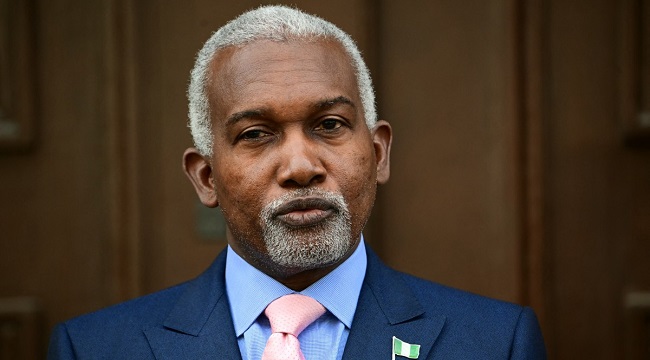
The Minister of Foreign Affairs, Yusuf Tuggar, has resigned.
The minister’s action followed the directive of President Bola Tinubu to all political appointees in his administration who intend to contest elective positions in the 2027 elections to resign from their posts on or before March 31.
The president had hinged his decision on Section 88(1) of the Electoral Act 2026 and the timetable released by the Independent National Electoral Commission (INEC) for party primaries ahead of the 2027 polls.
Tuggar’s resignation comes amid the speculation of his interest in contesting the 2027 Bauchi State governorship election on the platform of the All Progressives Congress (APC).
He is a seasoned diplomat, policymaker, and political figure who was appointed as minister by Bola Ahmed Tinubu in August 2023.
Born on March 12, 1967, he has built a distinguished career spanning diplomacy, politics, energy, and strategic consulting.
He is widely regarded for his role in shaping Nigeria’s global engagement and advancing its foreign policy priorities.
His political career includes serving as a member of the House of Representatives from 2007 to 2011, representing the Gamawa Constituency in Bauchi State.
The diplomat later contested the governorship of the state in two election cycles.
From 2017 to 2023, Tuggar served as Nigeria’s ambassador to Germany, where he played a key role in strengthening bilateral relations, enhancing trade cooperation, and promoting Nigeria’s interests in Europe.
As Minister of Foreign Affairs, Tuggar led Nigeria’s diplomatic efforts under the Tinubu administration. (Channels)
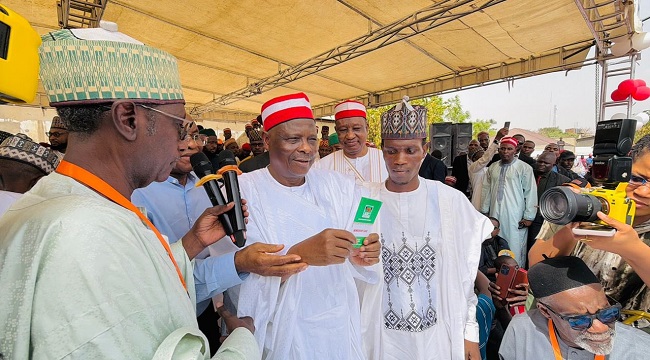
A former presidential candidate of the New Nigeria People’s Party (NNPP), Senator Rabiu Kwankwaso, has formally defected to the African Democratic Congress (ADC).
The former minister of defence registered with the ADC and received his membership card at Gidan Kwankwasiyya, Miller Road, Bompai, Kano.
The event was witnessed by chieftains of the ADC and a crowd of supporters, mainly from the Kwankwasiyya Movement.
Among the prominent personalities were former Senate President and ADC National Chairman, David Mark; the party’s National Secretary and former Minister of Interior, Rauf Aregbesola; and former Anambra State governor, Peter Obi.
Others are former Sokoto State governor, Senator Aminu Tambuwal; former Minister of Transportation, Rotimi Amaechi; Senator Dino Melaye; former APC National Chairman, Chief John Odigie-Oyegun; and former Imo State Governor, Emeka Ihedioha.
Following his registration, Kwankwaso, who served two terms as Kano State governor and has been a mainstay in national politics, posted on his X handle: “New Dawn. We are ADC.”
His defection to the ADC comes a day after he officially announced his resignation from the New Nigeria People’s Party (NNPP), under which he contested the presidency in 2023 and came fourth.
Kwankwaso said his decision to leave the NNPP was based on what he described as the “current trajectory of the nation’s political landscape, which calls for strategic realignment.”
“I wish to formally announce my resignation from the New Nigeria People’s Party (NNPP) with immediate effect. I seize this opportunity to express my profound gratitude for the honour and privilege of serving as the Party’s National Leader and its Presidential Candidate in the 2023 General Elections.
“As a committed and bona fide member of the party, this was not an easy decision to make. However, considering the current trajectory of the nation’s political landscape, which calls for strategic realignment, I have found it necessary to identify with another political platform that offers the best opportunity to effectively change the nation,” a statement he personally signed on Sunday partly read.
Kwankwaso is the latest among top challengers of President Bola Tinubu in the 2023 election to join the ADC, which the opposition coalition adopted last year as the umbrella platform to wrestle the presidency from the All Progressives Congress (APC) in 2027.
Former Vice President Atiku Abubakar, who came second behind Tinubu in the last election, and Peter Obi, who came third, had earlier joined the party.
Atiku wasted no time in welcoming Kwankwaso into the party with a post on his X handle on Monday, which read: “When men of conviction come together, power trembles. Welcome aboard, @KwankwasoRM.”
Before his official defection on Monday, Kwankwaso had held meetings with leading figures in the ADC, including Atiku, Obi, former Osun State governor Rauf Aregbesola, among others.
The former governor of Kano and senator rose to prominence through his grassroots-oriented Kwankwasiyya Movement, which has played a decisive role in shaping electoral outcomes in Kano.
His political journey has seen him move across major parties before leading the NNPP into the 2023 general elections, where he maintained significant influence in the North-West state.
With his influence, the NNPP’s candidate, Abba Yusuf, won the Kano State governorship election, defeating the ruling APC in the keenly contested polls.
However, a political fallout saw Governor Yusuf defect to the APC. With Kwankwaso now in the ADC, Kano again looks like a battleground for the 2027 elections. (Channels)
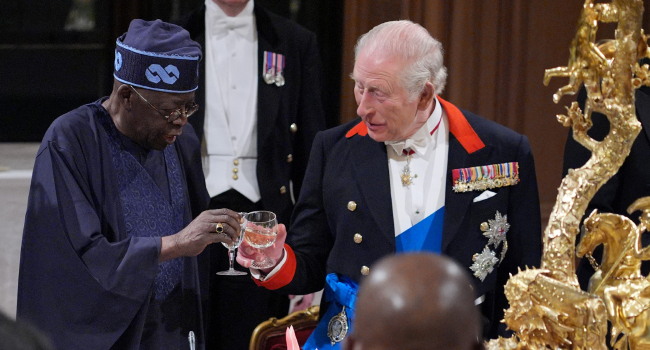
Oluwole Oke, chairman of the house of representatives committee on foreign affairs, says President Bola Tinubu’s two-day official visit to the United Kingdom has repositioned Nigeria on the global stage.
Following an invitation from King Charles III, Tinubu departed Abuja on Tuesday for London, accompanied by his wife and other top government officials.
The state visit, scheduled to end on Thursday, represents the highest level of diplomatic engagement hosted by the British monarchy and marks the first visit of such scale by a Nigerian leader to the UK in 37 years.
Speaking on Channels Television on Wednesday, Oke, who represents Obokun/Oriade federal constituency of Osun state in the green chamber, said beyond economic benefits, Tinubu’s UK visit has elevated Nigeria’s profile internationally.
“This state visit is not just an honour to the President and his family, but to all Nigerians,” he said.
“For the United Kingdom to invite a president on a state visit, they must have strong confidence in our reforms and in the governance under the leadership of President Bola Ahmed Tinubu.”
During the visit, Tinubu is expected to meet with Keir Starmer, UK prime minister, in a high-level bilateral engagement aimed at strengthening ties between Nigeria and Britain.
Reports indicate that a major highlight of the visit is the signing of a £746 million financing agreement between UK export finance, the Nigerian Ports Authority, and the Federal Ministry of Finance.
Oke said at the end of the visit, the British government will be looking forward to numerous opportunities for partnership between the two countries.
He also noted the importance of the maritime deal, which he said, would create jobs and generate huge revenue for the federal government.
“This kind of investment will have linkage effects that will snowball into employment,” he said.
“Participants in that sector will make profits, pay taxes, and, as you know, public finance relies on taxation. So, it is a positive development, and there will be many win-win outcomes. This invitation has further repositioned Nigeria on the global stage.” (TheCable)
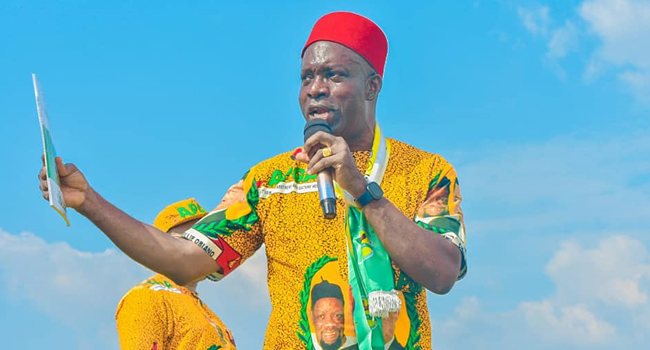
Chukwuma Soludo, governor of Anambra state, has been sworn in for a second term in office.
Onyekachukwu Ibezim also took the oath of office for a fresh tenure as deputy governor.
Soludo secured victory in the November 2025 governorship election, which was conducted across 5,718 polling units in Anambra state.
The incumbent polled 422,664 votes to defeat his closest rival, Nicholas Ukachukwu of the All Progressives Congress (APC), who came second with 99,445 votes.
Soludo was sworn in on Tuesday in Awka, the state capital, with several dignitaries in attendance.
Among those present were Vice-President Kashim Shettima, and former Nigerian presidents Olusegun Obasanjo and Goodluck Jonathan.
The event was attended by political stakeholders, government officials, supporters, and traditional rulers. It signposts the beginning of a new four-year tenure for the governor.
In his inauguration address, Soludo said he would deliver on his campaign promises.
He said his re-election was a “unanimous endorsement of his programmes and objectives”, promising the people of Anambra that “we would not take your support for granted”.
He thanked the federal government and international community for partnering with his government in the last four years.
The governor also appreciated members of the All Progressives Grand Alliance (APGA) and APC, saying “all progressives are working together”.
“Politics and elections are over. It’s time to work together for the development of Anambra,” he added. (TheCable)


 English