Posted on Leave a comment

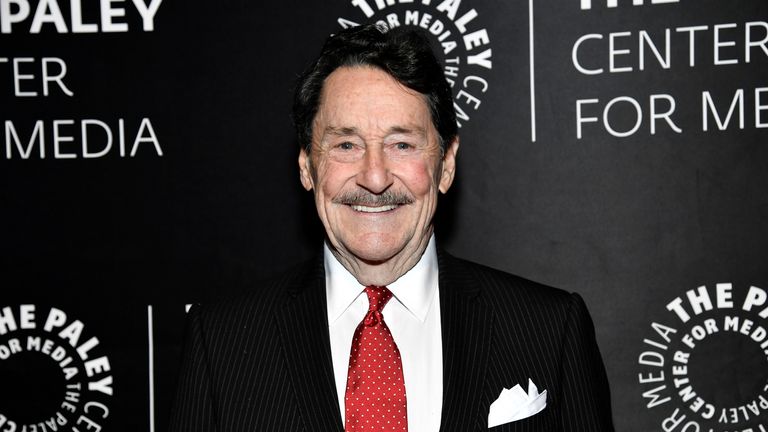
Chuck Norris, martial arts master and actor, dies at 86

Chuck Norris, the martial arts grandmaster and action star whose roles in “Walker, Texas Ranger” and other television shows and movies made him an iconic tough guy — sparking internet parodies and adoration from presidents — has died at 86.

Norris died Thursday, in what his family described as a “sudden passing.”

“While we would like to keep the circumstances private, please know that he was surrounded by his family and was at peace,” the family said in a statement posted to social media.

Before he would become a star in movies and on TV, Norris was wildly successful in competitive martial arts. He was a six-time undefeated World Professional Middleweight Karate champion. He also founded his own Korean-based American hard style of karate, known sometimes as Chun Kuk Do, and the United Fighting Arts Federation, which has awarded more than 3,300 Chuck Norris System black belts worldwide. Black Belt magazine ultimately credited Norris in its hall of fame with holding a 10th degree black belt, the highest possible honor.

Born Carlos Ray Norris in Ryan, Oklahoma, on March 10, 1940, he grew up poor. At age 12, he moved with his family to Torrance, California, and joined the U.S. Air Force after high school, in 1958. It was during a deployment to Korea that he started training in martial arts, including judo and Tang Soo Do.

“I went out for gymnastics and football at North Torrance high,” he told The Associated Press in 1982. “I played some football, but I also spent a lot of time on the bench. I was never really athletic until I was in the service in Korea.”

After he was honorably discharged in 1962, he worked as a file clerk for Northrop Aircraft and applied to be a police officer, but was put on a waitlist. Meanwhile, he opened a martial arts studio, which expanded to a chain, with students including such stars as Bob Barker, Priscilla Presley, Donny and Marie Osmond, and Steve McQueen, whom he later credited with encouraging him to get into acting.

Norris made his film debut as an uncredited bodyguard in the 1968 movie “The Wrecking Crew,” which included a fight with Dean Martin. He had also crossed paths with Bruce Lee in martial arts circles. Their friendship — sometimes, as sparring partners — led to an iconic faceoff in the 1972 movie “Return of the Dragon,” in which Lee fights and kills Norris’ character in Rome’s Colosseum.

He went on to act in more than 20 movies, such as “Missing in Action,” “The Delta Force” and “Sidekicks.”

“I wanted to project a certain image on the screen of a hero. I had seen a lot of anti-hero movies in which the lead was neither good nor bad. There was no one to root for,” Norris said in 1982.

In 1993, he took on his most famed role, as a crime-fighting lawman in TV’s “Walker, Texas Ranger.” The show ran for nine seasons, and in 2010, then-Gov. Rick Perry awarded him the title of honorary Texas Ranger. The Texas Senate later named him an honorary Texan.

“It’s not violence for violence’s sake, with no moral structure,” Norris told the AP in 1996, speaking about the show. “You try to portray the proper meaning of what it’s about — fighting injustice with justice, good vs. bad. … It’s entertaining for the whole family.”

Norris also made a surprise comedic appearance as a decisive judge in the final match of the 2004 movie “Dodgeball.” He only on occasion had taken acting roles in recent years, including 2012’s “The Expendables 2” and the 2024 sci-fi action movie “Agent Recon.” He’s due to appear in “Zombie Plane,” an upcoming film starring Vanilla Ice.

It was around the time of “Dodgeball” that his toughman image became the stuff of legend, literally: “Chuck Norris Facts” went viral online with such wildly hyperbolic statements as, “Chuck Norris had a staring contest with the sun — and won,” and, “They wanted to put Chuck Norris on Mt. Rushmore, but the granite wasn’t tough enough for his beard.”

Norris ultimately embraced the absurdity of the meme craze, putting together “The Official Chuck Norris Fact Book,” which combined his favorites with supposedly true stories and the codes he aimed to live by. He would also write books on martial arts instruction, a memoir, political takes, Civil War-era historical fiction and more.

“To some who know little of my martial arts or film careers but perhaps grew up with ‘Walker, Texas Ranger,’ it seems that I have become a somewhat mythical superhero icon,” Norris wrote in the forward to the “Fact Book.” “I am flattered and humbled.”

That book raised money for a nonprofit he founded with President George H.W. Bush that promoted martial arts instruction for kids.

The intentionally outlandish statements featured in the 2008 Republican presidential primary, when Norris endorsed Arkansas Gov. Mike Huckabee and shot an ad playing on the “Chuck Norris facts.”

“Chuck Norris doesn’t endorse. He tells America how it’s going to be,” Huckabee said in the campaign ad.

President Donald Trump’s supporters later promoted “Trump Facts” in the same vein, and political pundits tried it as well, describing the commander-in-chief’s decision to seize Venezuela’s sitting president, Nicolas Maduro, as a “Chuck Norris Moment,” and its initial effect on oil prices a “Chuck Norris Premium.”

Norris was outspoken about his Christian beliefs and his support for gun rights, and backed political candidates for years — he even went skydiving with Bush for the former president’s 80th birthday. As for Trump, Norris endorsed him in the 2016 general election and wrote guest columns praising him without explicitly endorsing him in the days before the 2020 and 2024 elections.

Norris is survived by five children: stunt performers Mike and Eric with his late ex-wife Dianne Holechek, twins Dakota and Danilee with his wife Gena Norris, and Dina, the result of an early 1960s “one-night stand” revealed in his autobiography.

Norris celebrated his birthday just over a week before his death, posting a sparring video on Instagram.

“I don’t age. I level up,” he wrote. (JapanToday)

Posted on Leave a comment

Takaichi meets Trump at White House; says ‘Japan is back’

Japanese Prime Minister Sanae Takaichi sought to reaffirm her alliance with President Donald Trump on Thursday after the president this week seemed to complain that Japan was among the nations that did not join his call to help protect the Strait of Hormuz.

Takaichi, who met with Trump at the White House, told the president that Japan has opposed Iran’s development of its nuclear program and appealed to his desire to be seen as a peacemaker, despite his launching a war of choice with Iran. She told the U.S. president that in the Middle East and around the world now, there was “a very severe security environment,” but said, “Even against that backdrop, I firmly believe that it is only you, Donald, who can achieve peace across the world.”

The two leaders had warm words for each other, including Trump calling the prime minister a “popular powerful woman,” but there appeared to be some tension as they faced repeated questions from reporters about Japan’s support for the Iran war.

Trump told reporters that he and Takaichi would be discussing in their meeting Japan’s level of support for the U.S. in the Iran war, saying, “They are really stepping up to the plate.” He did not offer details.

He later said that much of the oil Japan relies on passes through the Strait of Hormuz and said, “so that’s a big reason to step up. He also mentioned U.S. spending in Japan and the number of troops it has stationed there.

“I expect Japan to step up you know, because we have that kind of relationship,” Trump said.

Taikaichi’s meeting at the White House, followed by a dinner Thursday night, was supposed to give her a prime opportunity to have Trump’s ear before he embarked on a trip to China.

The pair were all smiles in the evening, as Trump hosted a dinner in the prime minister’s office. “This is a spectacular woman, and it’s an honor to have you at the White House,” Trump said. Taikaichi referred to the leaders through an interpreter as “best buddies” before declaring, in English, “Japan is back.”

But now, the war in Iran and Trump’s unsuccessful call for Japan and other nations to help protect the vital Strait of Hormuz means the China trip has been delayed. Trump had repeatedly complained on camera and online that U.S. allies, including Japan, rejected his request to help safeguard the critical waterway for oil and gas transport.

The prime minister acknowledged before she left Japan that she expected her meeting with Trump will be “very difficult.”

Beyond facing questions about Iran, Takaichi and Trump are expected to announce a $40 billion nuclear reactor deal, according to a White House official, who was not authorized to speak publicly and spoke on the condition of anonymity to share details before the announcement.

Under the deal, U.S.-based GE Vernova Inc. and Japan-based Hitachi Ltd. will build advanced small modular reactors in Tennessee and Alabama, the official said. The deal aims to help stabilize electricity prices and expand power generation in the U.S.

Takaichi and her ministers have denied that Washington officially requested Japanese warships for the U.S.-Israeli operation.

Japan, a key U.S. ally in Asia, is one of the countries that Trump namechecked on Tuesday as he railed against the lack of help with the Strait of Hormuz before declaring the help wasn’t needed.

Kurt Campbell, the former U.S. deputy secretary of state in the Biden administration who is now chair of The Asia Group, said that in order to press for Japan’s interests, Takaichi will want to find a way to suggest that Japan is a part of the U.S. plan in the Middle East.

“She’s going to want to come out of that as a partner in this case and realize that if she can do that, that she can translate that potentially into the president listening more to Japanese concerns about Taiwan or other issues,” Campbell said.

The constraints on Japan’s involvement in Iran include a provision in its post-World War II constitution that bans the use of force except to defend its territory. The country’s military is called the Self-Defense Force.

Christopher Johnstone, a partner and chair of the defense and national security practice at The Asia Group, said Japan could help with mine-sweeping and has had “a small naval presence” in the region as part of an anti-piracy mission for at least a decade. But to join the U.S. mission would require Takaichi to clear “an exceptionally high bar politically to invoke collective self-defense” that has never been done before.

Takaichi, who had her first meeting with Trump in October in Tokyo, is Japan’s first female prime minister and a protégé of former leader Shinzo Abe, who developed a close relationship with Trump.

She is also a hardline conservative and longtime supporter of Taiwan whose comments about Japan’s willingness to provide military support to the island have heightened tensions with China.

Ahead of her meeting with Trump, Takaichi had sought to focus on trade, strengthening the U.S.-Japan relationship and security concerns. Japanese officials said the two sides would work to deepen cooperation in regional security, critical minerals, energy and dealing with China.

China views self-governed Taiwan, which the U.S. relies on for its production of computer chips, as its sovereign territory and has said it would take it by force if needed.

But beyond questions about helping with the Strait of Hormuz, the global implications of the Iran war have also put the Japanese leader in a tougher spot with Trump as she seeks to ensure U.S. commitment to the Indo-Pacific region.

Japan considers China a growing security threat and has pushed a military buildup on southwestern islands near the East China Sea. But the U.S. has shifted some troops stationed in Japan to the Middle East, removing a check against China’s power.

Takaichi is expected to raise concerns about troop shifts with Trump because they are coming at the same time China is launching a large number of exercises around Taiwan.

“This raises the prospect that — once again — the United States will be distracted and bogged down in the Middle East at a time when the deterrence problem in East Asia has never been greater,” Johnstone said. (JapanToday)

Posted on Leave a comment

FBI probing US counterterrorism director who resigned over Iran war

Joseph Kent, former director of director of the US National Counterterrorism Center (NCTC), is reportedly under probe by the Federal Bureau of Investigation (FBI) over allegations of classified information leaks.

The NCTC serves as the primary US government organisation for integrating and analysing terrorism-related intelligence from across federal agencies.

Kent resigned from his position on Tuesday over America’s involvement in the ongoing Iran conflict, saying he could not support the war against Tehran in good conscience.

“Iran posed no imminent threat to our nation, and it is clear that we started this war due to pressure from Israel and its powerful American lobby,” he said in a statement.

A report by Semafor said sources within FBI revealed that Kent is facing probe over allegations that he improperly shared classified information.

One of the sources said the probe predates Kent’s departure having been in progress for months.

According to the New York Times, the probe came after a coordinated Trump administration effort to discredit Kent as untrustworthy and disloyal.

On February 28, Israel launched what they called pre-emptive missile strikes on Iran. Hours after the announcement, President Donald Trump said the strikes were in collaboration with the United States.

Iran has continue to exchange strikes and counterstrikes with the US-Israel fighters. (TheCable)

Posted on Leave a comment

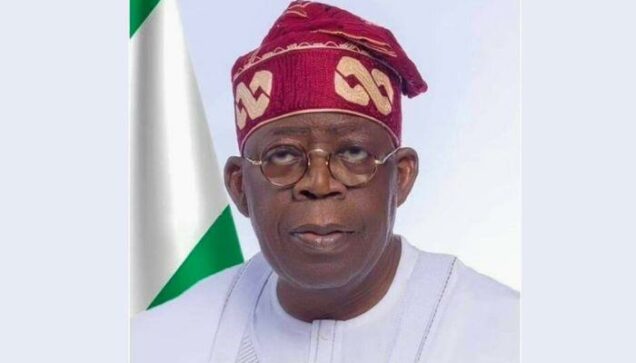
Starmer pushes strategic UK-Nigeria alliance with N1.4tn fresh deal

The United Kingdom and Nigeria have sealed new export agreements as both countries committed to taking their economic partnership to another level, UK Prime Minister Keir Starmer said on Thursday.

Starmer made the disclosure during a bilateral meeting with President Bola Tinubu at 10 Downing Street on the second day of the Nigerian leader’s historic state visit to Britain.

“Today is the opportunity to take that to another level with the agreements that we’ve been able to reach on exports, and I think that shows we can go even further than we’ve already gone,” the British Prime Minister stated.

Tinubu, in his remarks, revealed that Nigeria is currently undergoing “very strong reform of the economy” and linked the terrorism challenges facing West Africa to climate change conflict.

“We need more trade agreements and economic relationships that we build between nations. Nigeria is currently going through a very strong reform of the economy,” Tinubu said during the meeting at 10 Downing Street.

The President described Nigeria as facing significant challenges, stating, “The largest country in West Africa, and on the continent, is challenged by terrorism coming from the conflict of climate change.”

Tinubu emphasised that both countries face global economic challenges, noting, “Currently, the entire world is challenged. Nigeria is not immune. Britain is not immune.”

He said the discussions focused on the “economic welfare of the people and how we can work together to improve livelihood” amid economic volatility.

The President affirmed that Thursday’s bilateral discussions would address what Britain can do to “accelerate the friendship, partnership and collaboration” between both nations.

On his part, Prime Minister Starmer described the visit as historic, noting it was the first inward state visit for 37 years by a Nigerian leader.

“The long and shared history between our countries is obvious and much valued, as is the people-to-people contact and engagement that enriches lives here in the United Kingdom,” Starmer said.

He noted that both countries already collaborate on economy, defence, and security matters but expressed determination to deepen the partnership.

“Today is the opportunity to take that to another level with the agreements that we’ve been able to reach on exports,” the Prime Minister stated.

Nigeria became the United Kingdom’s biggest export market in Africa in January 2026, with bilateral trade continuing to expand.

King Charles III had disclosed on Wednesday night at a state banquet that visitors from Nigeria spent £178m in Britain in 2024, while 251,000 people from Britain travelled to Nigeria and spent just as much in return.

The state visit, which began on Wednesday, March 18, saw the signing of several memoranda of understanding and agreements covering trade, investment, defence, and cultural cooperation.

A major outcome already announced is a £746m financing deal involving UK Export Finance, the Nigerian Ports Authority, and the Ministry of Finance for the refurbishment of Lagos Port Complex (Apapa) and Tin Can Island Port.

The bilateral meeting at Downing Street followed Wednesday night’s state banquet at Windsor Castle, where King Charles III acknowledged “painful marks” in the shared history between both nations while praising Nigeria’s transformation and the contributions of the Nigerian diaspora to British society.

The state visit, the first by a Nigerian president since 1989 when former military leader Ibrahim Babangida was hosted by Queen Elizabeth II, concludes on Thursday with President Tinubu expected to return to Nigeria. (Punch)

Posted on Leave a comment

Iran and Russia are ‘brothers in hatred’, Zelensky tells MPs

The Iranian and Russian regimes are “brothers in hatred”, Volodymyr Zelensky has told MPs and peers, as he warned about the dangers of drone warfare.

Addressing around 120 parliamentarians in a Westminster committee room, the Ukrainian president highlighted how Tehran was selling Shahed ‘kamikaze’ drones to Moscow, which had been used in Ukraine.

He also warned against easing sanctions on Russian oil, saying it was “crucial” to keep up the pressure against Moscow.

The US has temporarily eased sanctions on some Russian oil in an attempt to tackle surging prices triggered by the conflict in the Middle East.

Among those in the audience in a packed committee room were Prime Minister Sir Keir Starmer, Nato secretary-general Mark Rutte, Defence Secretary John Healey and leaders of opposition parties.

In his speech, Zelensky sought to link the headline-generating war in the Middle East with the long-running conflict in Ukraine.

He argued that Ukrainians were now pioneers in modern warfare and schooled in techniques they could share with allies.

In its fight against Russia, Ukraine has been using cheap, mass-produced interceptor drones to defend its skies.

Zelensky said there were now 201 Ukrainian military experts in the Middle East, with another 44 ready to deploy, who were sharing their knowledge on how to defend against Iranian drones.

He added that Ukraine was “ready to offer similar deals to all our reliable partners”.

On a TV screen, Zelensky demonstrated how Ukraine was mapping Russian strikes and defensive action against them in real time.

He explained how using technology as simple as an iPad allowed Ukrainian commanders to control the country’s security.

Zelensky added that during a meeting earlier at Buckingham Palace, he gave the King the iPad “as a sign of respect and gratitude”, to “strengthen our cooperation with the United Kingdom”.

Earlier, Sir Keir said “the focus must remain on Ukraine” despite the Iran war, ahead of a meeting with Zelensky.

Welcoming the Ukrainian leader to No 10, the prime minister said: “Putin can’t be the one who benefits from a conflict in Iran, whether that’s oil prices or the dropping of sanctions.”

During their meeting, the leaders agreed a new defence partnership aimed at tackling cheap attack drones.

Downing Street said the deal would bring together “Ukrainian expertise and the UK’s industrial base” to manufacture and supply drones and other capabilities.

Under the partnership between the UK and Ukraine, closer co-operation in the defence industries will also be sought with third countries as part of efforts to bolster international security.

Britain will also give £500,000 to fund an AI centre of excellence in Kyiv.

It comes as the US-Israeli war with Iran enters a third week, while US President Donald Trump continues to criticise the UK and other countries over the extent of their response to the conflict.

Rising oil prices are fuelling Russia’s war machine, while Ukraine’s allies are distracted and divided over the Middle East.

Zelensky is currently on a tour of European capitals to shore up support and keep his conflict at the forefront of allies’ minds. (BBC)

Posted on Leave a comment

Barcelona, Liverpool, Bayern and Atletico reach Champions League quarterfinals

Barcelona hit Newcastle United for seven to reach the Champions League quarterfinals on Wednesday, while Liverpool overturned a first-leg deficit to beat Galatasaray in their last-16 tie and both Bayern Munich and Atletico Madrid advanced to the next round.

Raphinha and Robert Lewandowski both scored twice as La Liga leaders Barcelona tore apart Newcastle at the Camp Nou, winning 7-2 in the second leg of their last-16 encounter to progress 8-3 on aggregate.

A spectacular match saw Anthony Elanga twice score for Newcastle inside the opening half-hour to cancel out goals by Raphinha and Marc Bernal.

However, the Catalans went back in front when Lamine Yamal converted a penalty deep in first-half stoppage time to make it 3-2 on the night, and they never looked back.

Fermin Lopez ran through for 4-2 early in the second half before Lewandowski added a quick-fire double either side of the hour mark, and Raphinha completed the scoring in the 72nd minute.

“The confidence that we got in the second half was good to see,” said Barca coach Hansi Flick.

It was a chastening defeat for Newcastle and just the third time since 1955 that an English team has conceded at least eight goals on aggregate in a European tie — one of the other occasions was this week, when Chelsea lost 8-2 on aggregate to Paris Saint-Germain.

“When the game was effectively over we didn’t react well to that, so it became a very difficult second half,” said Newcastle coach Eddie Howe.

It was also just the third time Barcelona have scored seven in a Champions League game, and Flick’s side can now look forward to an all-Spanish quarter-final next month against Atletico.

Diego Simeone’s men lost 3-2 on the night to Tottenham Hotspur in London, but progressed 7-5 on aggregate thanks to their 5-2 victory last week.

Randal Kolo Muani headed in on the half-hour to give Spurs the lead on the night and suggest a stunning comeback in the tie was possible.

A superb Julian Alvarez strike just after half-time doused the home side’s hopes, even if a fine Xavi Simons effort put Tottenham back in front.

David Hancko headed in Atletico’s second on the night, before Simons converted a last-minute penalty for his second of the game as Spurs rescued some pride by ending a run of eight matches without a win.

Liverpool were too good for Galatasaray, overturning a 1-0 first-leg deficit against the Turkish side with a comprehensive 4-0 win at Anfield.

Arne Slot’s side went ahead on 25 minutes through a lovely first-time finish at a corner from Dominik Szoboszlai.

Mohamed Salah then had a poor penalty saved in first-half stoppage time, but the Egyptian made up for that in style after the break.

He laid on two goals in the space of three minutes, one for Hugo Ekitike and the other for Ryan Gravenberch.

Salah then scored the fourth himself just after the hour, curling a superb effort into the far corner from the edge of the area from a Florian Wirtz lay-off.

It was his 10th club goal this season was also his 50th in the Champions League, and it sealed a 4-1 aggregate victory which takes the Reds through to a quarterfinal against PSG.

That will be a repeat of a last-16 tie a year ago which PSG won on penalties — the French club have won four knockout ties against English opponents since the start of 2025.

“We could (have) won 10-0, but we did a good job. We can be proud,” said Ekitike.

Bayern’s progress against Atalanta was never in doubt after their 6-1 win in the first leg in Italy, and they followed that with a 4-1 success in Munich.

Harry Kane opened the scoring with a retaken first-half penalty — his initial effort had been saved — and then added a brilliant second on 54 minutes.

The brace took the Englishman to a half-century of Champions League goals, as he joined Salah and Thierry Henry on that overall mark — Kane has done it in 66 games compared to 97 for Salah.

Teenager Lennart Karl got Bayern’s third and Luis Diaz the fourth, with Lazar Samardzic pulling one back as the Germans progress 10-2 on aggregate — they now face Real Madrid in a heavyweight showdown.

“We don’t fear anyone,” Kane told DAZN when asked about the prospect of that tie. (JapanToday)

Posted on Leave a comment

‘I found safety here,’ Tinubu recounts UK’s protection during pro-democracy struggle

President Bola Tinubu has recalled how he found refuge in the United Kingdom during Nigeria’s pro-democracy struggle, stating that British authorities once placed his residence under police protection amid threats from agents of the military regime.

Tinubu made the remarks on Wednesday during a state banquet hosted by King Charles III at Windsor Castle.

In his address, the Nigerian leader expressed gratitude to the UK for its support during the years of military rule.

“Your Majesty, I wish to express Nigeria’s deep gratitude to this great nation for the refuge and support it extended during the dark years of military dictatorship.

“Like many Nigerians involved in the pro-democracy struggle, I found safety here, and I recall that my residence was placed under Metropolitan Police surveillance for protection following threats from agents of the junta,” he said.

He added that such solidarity remains significant, noting it was “deeply humbling” to return as President of a democratic Nigeria.

igeria’s pro-democracy struggle reached its peak in the 1990s following the annulment of the June 12, 1993 presidential election won by Moshood Abiola under the regime of Ibrahim Babangida. The decision triggered widespread protests and resistance.

Repression intensified during the rule of Sani Abacha, marked by arrests, assassinations, and the execution of Ken Saro-Wiwa and the Ogoni Nine, drawing international condemnation.

Sustained pressure from pro-democracy groups, including civil society organisations and the media, eventually paved the way for a transition to civilian rule under Abdulsalami Abubakar in 1999, ushering in the Fourth Republic with Olusegun Obasanjo as President.

The legacy of the struggle endures, notably through the recognition of June 12 as Democracy Day and ongoing efforts to honour its key figures.

Tinubu also highlighted Nigeria’s current security challenges, particularly terrorism linked to instability in the Sahel, stressing the importance of continued cooperation with the UK.

“Our West African region faces complex terrorism challenges with roots in the Sahel. Nigeria carries an enormous responsibility to help safeguard regional stability.

“In confronting these threats, partnership with the United Kingdom remains essential,” he said, adding that he looked forward to meeting Prime Minister Keir Starmer.

The President further expressed confidence in the future of bilateral relations, noting that both countries share a commitment to progress, mutual respect, and common values.


He also pointed to Nigeria’s role within the Commonwealth of Nations as a platform for strengthening ties.

Reflecting on historical and institutional links, Tinubu acknowledged the influence of British legal and political traditions on Nigeria’s governance system, including its courts, parliamentary structures, and civil service.

He also praised the contributions of Nigerians in the UK, describing them as the “strongest bridge” between both nations, particularly in sectors such as healthcare, business, technology, and the arts. (Channels)

Posted on Leave a comment

State Visit: Tinubu meets UK PM Keir Starmer

President Bola Tinubu has met Britain’s Prime Minister Keir Starmer as part of his two-day state visit to the United Kingdom.

They met on the steps of 10 Downing Street in central London on Thursday.

The president’s historic state visit to the UK is the first state visit by a Nigerian president in 37 years (since the last one before the return to democracy in 1999).

Tinubu arrived in the UK on Tuesday, where he was received by King Charles III and Queen Camilla at Windsor Castle.

The visit included royal engagements, a state banquet, and discussions on various bilateral issues. It involved closed-door bilateral talks.

The president is expected to sign a £746 million financing deal related to port infrastructure, along with other agreements/MoUs on trade, defence, and culture.

Today also marks the final day of the visit, after a farewell from the royal family. (Channels)

Posted on Leave a comment

Senegal to appeal ‘unjust’ AFCON ruling

Senegal’s football authorities said they will appeal to the Court of Arbitration for Sport after the country was stripped of the Africa Cup of Nations title on Tuesday.

“The Senegalese Football Federation condemns this unjust, unprecedented and unacceptable decision, which brings African football into disrepute,” it said in a statement.

“To defend its rights and the interests of Senegalese football, the federation will, as soon as possible, file an appeal with the Court of Arbitration for Sport (CAS) in Lausanne.”

Several Senegalese players controversially walked off the pitch in Rabat during the final on January 18 in protest when the hosts were awarded a penalty late in second-half stoppage time.

After Senegal’s players eventually returned having been coaxed back onto the pitch by captain Sadio Mane, Morocco missed the penalty and Pape Gueye went on to score the goal in extra time that gave his team a 1-0 victory.

CAF said that having studied Morocco’s appeal, “the Senegal national team is declared to have forfeited the match” and the result was “officially recorded as 3-0” in favour of Morocco.

The CAF Appeals Committee justified its decision by applying Articles 82 and 84 of the AFCON Regulations, which state that if a team “refuses to play or leaves the ground before the regular end of the match without the authorisation of the referee, it shall be considered (loser) and shall be eliminated for good from the current competition”.

The articles add that the team contravening the regulations “will lose its match by 3-0”.

The Royal Moroccan Football Federation (FRMF) said in a statement its appeal “was never intended to contest the sporting performance of the teams participating in this competition, but solely to request the application of the competition regulations”.

“The Federation reaffirms its commitment to respecting the rules, to the clarity of the competitive framework, and to the stability of African competitions,” the statement added.

Senegal’s football authorities said they will appeal “as soon as possible” to the Court of Arbitration for Sport.

“The Senegalese Football Federation condemns this unjust, unprecedented and unacceptable decision, which brings African football into disrepute,” it said in a statement.

Minutes before the end of the match, some Senegalese supporters attempted a pitch invasion, while Senegal’s players halted the game for nearly 20 minutes to protest the late penalty awarded to Morocco.

The controversial spot-kick was awarded by Congolese referee Jean-Jacques Ndala right at the end of the allotted eight added minutes in normal time following a VAR check for a challenge on Brahim Diaz by El Hadji Malick Diouf.

The game was goalless at the time and Diaz could have won the trophy for Morocco with the spot-kick in the 24th minute of added time at the end of normal time.

But Senegal goalkeeper Edouard Mendy easily saved the weak attempted ‘Panenka’ chip by the Real Madrid winger, who was clearly distracted by the long delay that followed the penalty award.

The game at the Prince Moulay Abdellah Stadium then went to extra time, and Gueye’s brilliant 94th-minute strike won it for Senegal.

Several of the team’s players posted on social media after the announcement that they had been stripped of the title.

Defender Moussa Niakhate, who plays for French club Lyon, posted a picture of himself lifting the Africa Cup of Nations trophy with a message that said “they’re mad”, in an apparent reference to CAF.

In the immediate aftermath of the final, FIFA president Gianni Infantino had condemned “some Senegal players” for the “unacceptable scenes”.

“It is unacceptable to leave the field of play in this manner, and equally, violence cannot be tolerated in our sport, it is simply not right,” Infantino, who attended the match, said.

In late January, CAF imposed a series of disciplinary sanctions, including fines amounting to several hundred thousand euros, on the federations of both countries for unsportsmanlike conduct and violations of fair play principles.

The appeal trial of 18 Senegalese supporters, imprisoned since the final and sentenced to prison terms ranging from three months to one year for “hooliganism,” which was scheduled to take place on Monday, has been postponed until March 30. (Channels)

Posted on Leave a comment

King Charles hosts Tinubu to state banquet, hails UK–Nigeria partnership

King Charles III on Wednesday praised what he described as a “partnership of equals” between the United Kingdom and Nigeria, as he hosted Bola Tinubu at a state banquet marking the first visit by a Nigerian leader in nearly four decades.

he banquet, held at Windsor Castle, brought together senior officials, business leaders, and cultural figures from both countries, underscoring deepening diplomatic and economic ties.

In his opening remarks, King Charles described the relationship between both nations as built on mutual respect and shared progress.

“Britain and the former British colony have a deep bond and a partnership of equals that has brought us both enormous benefits,” he said.

The monarch also highlighted Nigeria’s growing economic influence.

“Nigeria is an economic powerhouse. It has not merely changed, it has arrived,” he said, adding that “Nigeria is investing in Britain’s future as much as Britain is investing in Nigeria’s.”

King Charles paid glowing tribute to Nigerians living in Britain, describing them as central to the country’s development.

“We in the United Kingdom are blessed that so many people of Nigerian heritage… are now at the heart of British life,” he said.T

The King noted their contributions across sectors, including business, technology, academia, law, science, sports, literature, and the arts.

“I have met so many of these quiet heroes in our schools, businesses, National Health Service, and universities, including countless young people who have flourished through the work of my King’s Trust over the last 50 years,” he said.

He added with humour, “Only last week, I was delighted to host a rather lively group of them to a jollof and tea party at St. James’s Palace. I was firmly assured that the jollof was only the best — Nigerian, of course… or perhaps Ghanaian or Senegalese. Diplomatically, I cannot remember.”

The monarch also acknowledged Nigeria’s cultural footprint in Britain, referencing Afrobeats, Nollywood, and Nigerian excellence across professions.

“From Afrobeats filling our concert halls and Nollywood captivating our screens… so much of Britain’s culture is in truth profoundly enriched by Nigerians,” he said, before concluding: “Naija no dey carry last.”

Acknowledging history, King Charles noted that while the relationship has evolved, it is not without its challenges.

“There are chapters in our shared history that I know have left painful marks… no words can dissolve these,” he said.

The King also thanked Tinubu for visiting during Ramadan, describing it as “no small sacrifice,” and wished him “Ramadan Mubarak.” The banquet—adjusted to accommodate fasting—featured an iftar and provisions such as a prayer room.

Tinubu, while responding, echoed the sentiment.

“Our people remain the strongest bridge between our two countries,” he said, pointing to their impact in healthcare, sports, and beyond.

“Our two nations share a vision of progress based on mutual respect and common values,” President Tinubu added, noting he was the first Nigerian leader to speak at Windsor Castle.

Also in attendance were the wife of the President, Oluremi Tinubu; Queen Camilla, Minister of Finance and Coordinating Minister of the Economy, Chief Wale Edun; National Security Adviser, Mallam Nuhu Ribad; and President of the Senate, Godswill Akpabio.

The attendees include the Attorney General of the Federation and Minister of Justice, Lateef Fagbemi, SAN; Minister of Defence, General Christopher Gwabin Musa (retd.); Minister of Communications, Innovation and Digital Economy, Bosun Tijani; Minister of Arts, Culture and the Creative Economy, Ms. Hannatu Musawa; and Minister of Industry, Trade and Investment, Jumoke Oduwole, among other cabinet members.

Governors in attendance were Dapo Abiodun (Ogun), Peter Mbah (Enugu), and Babajide Sanwo-Olu (Lagos), among others.

Other prominent guests at the banquet included Maro Itoje, Christine Ohuruogu, Eniola Aluko, Ben Okri, and Tiwa Savage—figures the King described as a “living bridge” between both nations.

Earlier, President Tinubu was received with full state pageantry, including a guard of honour and a ceremonial gun salute, as artillery rang out across Windsor.

Nigerian and British flags lined the streets while the President and the King inspected troops in traditional regalia.

The visit, part of a two-day state engagement, is aimed at strengthening cooperation in trade, investment, security, and education, while also recognising the role of the Nigerian diaspora in the UK.

It is the first visit by a Nigerian president in 37 years.

President Tinubu is scheduled to meet Keir Starmer and engage with members of the Nigerian diaspora as part of the visit.

The trip builds on longstanding ties between both countries, with London hosting a large Nigerian community that continues to play a vital role in strengthening bilateral relations. (Channels)