
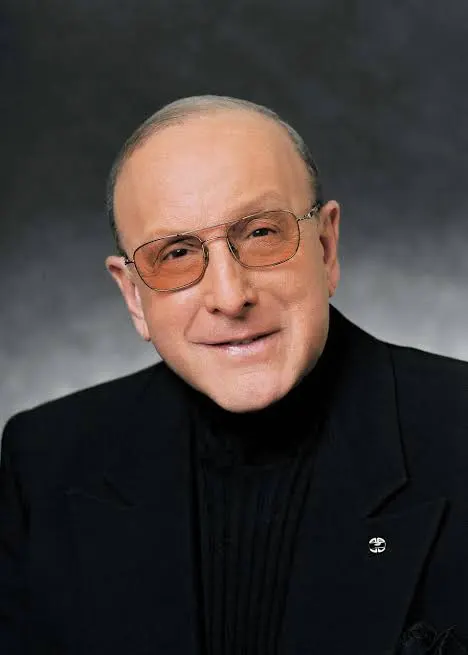
Clive Davis, the record company lawyer who became one of the music industry’s most powerful figures, launching or resurrecting the careers of such superstars as Janis Joplin, Whitney Houston, Carlos Santana and Alicia Keys, has died, his family confirmed. He was 94.
Earlier this year, Davis was hospitalized following an upper respiratory issue and was released a few days later. His death, in his Manhattan apartment, was confirmed by his publicist Aliza Rabinoff, who also shared a statement from his family.
“To the world, our father was the iconic music legend whose vision, instincts, and relentless pursuit of excellence shaped the soundtrack of countless lives. He discovered, mentored, and championed the greatest artists in modern music history, leaving an indelible mark on culture that will endure for generations,” the statement read.
Unlike other record moguls whose influence waned as they got older, Davis’ might only seemed to grow, spanning multiple genres and labels. Into his later years, he was directing the careers of everyone from Barry Manilow to “American Idol” winners Carrie Underwood and Kelly Clarkson. And his exclusive pre-Grammys gala, held the Saturday night before the Sunday award show every year since 1975, continued to be an institution.
“Clive’s talent has always been seeing and hearing what other people don’t,” former President Barack Obama said in a video message played at this year’s gala.
Clive Jay Davis was born on April 4, 1932 in Brooklyn, New York, where he grew up in the Crown Heights neighborhood. His father was an electrician and traveling salesman. He attended New York University and then Harvard Law School, eventually landing a job as an in-house lawyer at Columbia Records.
Davis always had a knack for business, and by 1967, became president of the company, just seven years after being hired as an attorney. He cited attending the Monterey International Pop Festival that year as pivotal; it eventually led him to bringing Bruce Springsteen, Chicago, Neil Diamond and many other groups to the label — bringing a counterculture spirit to a company that had resisted rock ‘n’ roll.
Davis took big swings in the music industry, particularly in his support for Black artists, beginning when he signed Gamble and Huff’s Philadelphia International Records in 1971.
In 2015, the NAACP recognized Davis for his groundbreaking work by presenting him with the Vanguard Award. And last summer, Davis was presented with the Apollo Theater’s Apollo Legacy Award and inducted onto its Walk of Fame.
His success stories were staggering, with Houston a crowning achievement and devastating tragedy: Davis signed her to his Arista record label when she was just a teen and turned her into America’s reigning pop princess.
Houston racked up multiple No. 1 hits and became one of the top-selling artists in pop history before drug abuse hobbled her career. She died in a Los Angeles hotel room in 2012, just hours before she was to appear at the annual pre-Grammy Awards gala hosted by Davis, who had been convinced she was turning her life around.
“Maybe I should have been more skeptical,” Davis wrote in his 2013 memoir, “The Soundtrack of My Life,” “but I’ve always been optimistic, and I felt hopeful. It felt like old times.”
He also launched the career of multi-platinum, multiple-Grammy winner Keys — and was quick to note other talents he signed, including Joplin and Billy Joel, Blood Sweat & Tears and other “all-timers,” as he so often put it.
“I signed Patti Smith, the great Renaissance woman … I signed Lou Reed … I signed the Grateful Dead,” he proudly touted in an interview with The Associated Press in 1999.
He also signed the then up-and-coming producer Sean “Diddy” Combs to a label deal with his Bad Boy Records. Under Davis, the label would have some of its biggest successes, most notably with late rap icon the Notorious B.I.G. That was long before the hip-hop mogul Diddy would be incarcerated, convicted of violating the federal Mann Act, which bans transporting people across state lines for any sexual crime. (JapanToday)
 English