President Bola Tinubu has approved a minor cabinet reshuffle in the Federal Executive Council, which led to the exit of the Minister of Finance and Coordinating Minister for the Economy, Wale Edun and the Minister of Housing and Urban Development Ministry, Ahmed Dangiwa.
According to a statement from the Special Adviser, Media and Publicity to the Secretary to the Government of the Federation, Yomi Odunuga, on Tuesday, the memo signed by the Secretary to the Government of the Federation, Senator George Akume, indicated that two cabinet members, Mr. Wale Edun and Architect Ahmed Dangiwa are to leave the cabinet while their replacements have been named.
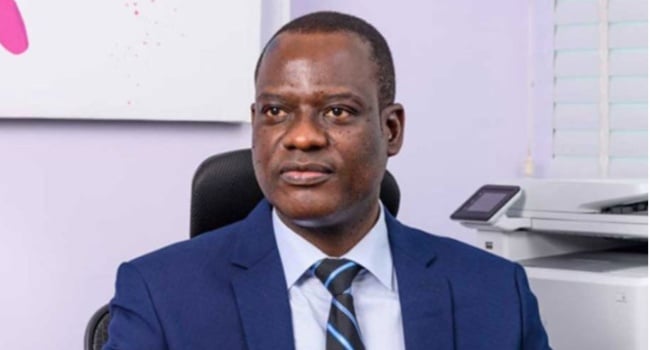
Edun, until the latest development, was the Minister of Finance and Coordinating Minister for the Economy. He has been directed to hand over to Mr Taiwo Oyedele, who is now to take over as Minister of Finance and Coordinating Minister of the Economy. Oyedele was formerly a Minister of State in the ministry.
Also, Mr Muttaqha Rabe Darma (PhD) has been named as the ministerial nominee and minister designate for the Housing and Urban Development Ministry.
The memo stated that “all handing over and taking over processes should be completed on or before the close of business on Thursday, 23rd April, 2026.”
Explaining the President’s decision, Akume said: “These changes are aimed at strengthening cohesion, synergy in governance as well as achieving more impactful delivery on the economy to Nigerians, through the Renewed Hope Agenda.”
He said the President, in approving the cabinet reshuffle, has fully exercised his powers as conferred on him by Sections 147 and 148 of the Constitution of the Federal Republic of Nigeria (1999, as amended).
The President thanked the outgoing ministers for their services to the nation while wishing them the best in all their future endeavours.
The President, Akume, noted, equally assured all cabinet members that “the process of reinvigoration shall be continuous.” (TVCNews)
President Bola Tinubu on Tuesday commissioned the Nigeria Revenue Service (NRS) headquarters in Abuja, declaring that no serious nation could attain lasting prosperity with a weak and fragmented revenue system.
Speaking at the official event, Tinubu said the commissioning went beyond the physical unveiling of the building, marking a pivotal step in the administration’s fiscal reforms aimed at restoring public trust and building an economy rooted in discipline and equity.
“No serious nation can achieve lasting prosperity on a weak and fragmented revenue system. No government can demand trust from its citizens when taxation is opaque, inefficient or unjust,” Tinubu declared.
He said his administration had taken bold steps to overhaul the tax system, simplifying processes, eliminating distortions, and fostering a transparent, investment-friendly environment.
“That is why this administration took the bold decision to embark on far-reaching tax and fiscal reforms, reforms designed to simplify our system, eliminate distortions and create a fair, transparent and investment-friendly environment,” the president said.
Tinubu said the early outcomes of these reforms were already evident, including improved fiscal stability and stronger investor confidence.
“Our direction is clear: a revenue system that rewards enterprise, supports growth and ensures that every contribution to the national purse is matched by feasible value for people. The early results are encouraging, fantastic,” he said, thanking NRS Executive Chairman Zacch Adedeji for his role.
He described the new headquarters as a symbol of professionalism and accountability. “The building is more than concrete and steel; it is a symbol of a new standard of professionalism, transparency, efficiency and service. It reflects our result that institutions must rise to meet the demand of reforms and the expectations of the Nigerian people,” Tinubu said.
The president urged the NRS to prioritise trust-building and fairness.
“We must thank Nigerian people for enduring and persevering, for their resilience to date and to the Nigerian Revenue Service, you must embody this new ethos. It must not only collect revenue, it must build trust, it must ensure fairness,” he said.
Tinubu reaffirmed his inaugural pledge as a covenant with Nigerians. “On my inauguration day, I made a solemn pledge that we would move Nigeria from the dimness of uncertainty into the clear light of renewed hope. I committed that, that we will confront structural weaknesses, restore fairness and build an economy anchored on discipline, equity and opportunity. Today, I stand before you to reaffirm that these words were not rhetoric. They were a covenant with the Nigerian people,” he said.
He concluded by commissioning the building, saying, “We are facing reform, we have chosen discipline, we have chosen progress, we have chosen development, prosperity and inclusiveness, and we will stay this course, steadfast and focused, until promise of Nigeria is matched by the performance of its institutions and the prosperity of its people. To the glory of God Almighty and to the benefit of Nigerians at home and abroad, I hereby declare this building and the God blessed public of Nigeria and the tax collector,” Tinubu said.
Senate President Godswill Akpabio, in his goodwill message, described the event as a testament to divine favour and visionary governance.
He celebrated the transformation of Nigeria’s revenue system under Tinubu in Lagos, from monthly collections of N4 billion to over N69 billion, attributing it to the president’s foresight.
“This is wonderful in the sight of God and this is wonderful in the sight of man. And of course, they say, whatever is done on earth, is also done in heaven. I’m very sure that this is the case. It’s also being celebrated in heaven,” Akpabio began.
He recalled his endorsement during the primaries, emphasising Tinubu’s unique vision.
“Your Excellency the President, when we were coming into office, during the primaries and the convention, I made a statement that We’re going to elect a candidate who has good sight and vision. And that sight and that vision enabled him to take the revenue service in legal sense from N4 billion a month in Lagos. So what we are having today is over N69 billion. And of course, I said can we do the same for Nigeria? If elected. Thank God, Nigerians believed me and elected you,” Akpabio said.
The Senate President highlighted state-level progress and Tinubu’s commitment to true federalism.
“Today, Mr President, you have sent me to commission many projects in states of the Federation. And one of those that we first commissioned was the lithium factory in Nasarawa State… Consistently you’ve shown that you do not only believe in democracy, but you believe in true federalism. That every money that goes into the Federation account, has a shine in our constitution,” he stated.
Akpabio celebrated NRS gains amid global oil disruptions and commended Tinubu’s personnel choices.
“Nigeria today even with the closure of the Hormuz Strait… we have not had 2, 3, 4, 5 kilometers of fuel line… You have a knack for picking good people… Dr Zacch, congratulations.”
Akpabio envisioned the NRS as a symbol of self-reliance. “Imagine this edifice, rising in the heart of our nation’s capital… No nation can endure if it depends only on what is given to it… The National Assembly must continue to stand firmly behind this president… Let us not say that you came to open a door that will work only through your administration, but you have opened a chapter that will bring total responsibility.”
Akpabio urged fiscal prudence on inherited debts.
“I get worried when I read that you have made numerous debts, including ways and means of worth N33 trillion… In the future of Nigeria, we cannot ignore others’ past mistakes.”
Speaker of the House of Representatives, Abbas Tajudeen, in his goodwill message, said the NRS headquarters symbolised Nigeria’s commitment to institutional discipline.
“Institutions reveal themselves not only through laws or leadership but also through the systems they sustain over time. This building invites a different kind of reflection. It is not simply about scale or design. It is about whether Nigeria now possesses the institutional discipline to convert authority into consistent outcomes,” Abbas said.
He praised the Tinubu administration’s fiscal reforms for their courage and clarity.
“The fiscal reform programme initiated under President Bola Ahmed Tinubu required not only technical clarity but political courage. It required a willingness to confront structural weaknesses that had accumulated over time and to make decisions whose benefits would not be immediate but whose necessity was clear,” the Speaker said.
Abbas highlighted the challenges of the old system and the impact of the 2025 Tax Reform Acts. (Sun)
President Bola Tinubu has signed the 2026 Appropriation Bill into law, authorising an aggregate expenditure of ₦68.32 trillion for the current fiscal year.
He also signed a separate bill extending the implementation period of the 2025 budget from March 31 to June 30, 2026.
The budget allocates ₦4.799 trillion for statutory transfers and ₦15.8 trillion for debt service.
It further sets aside ₦15.4 trillion for recurrent expenditure and ₦32.2 trillion for capital expenditure through the Development Fund.
The presidency made the disclosure in a statement signed by Special Adviser on Information and Strategy, Bayo Onanuga on Friday.
The statement read, “President Bola Ahmed Tinubu has assented to the 2026 Appropriation Bill, which provides for an aggregate expenditure of ₦68.32 trillion. He has also signed the bill extending the implementation period for the 2025 budget from March 31, 2026, to June 30, 2026.
“The N68.32 trillion budget for this year earmarks N4.799 trillion for statutory transfers and N15.8 trillion for debt service. It allocates N15.4 trillion to recurrent expenditure and N32.2 trillion to the Development Fund for Capital Expenditure.
“With capital expenditure accounting for about 50 per cent, the 2026 budget underscores the administration’s continued commitment to economic stability, national security, infrastructure development, and inclusive growth.
“The allocations reflect a strategic balance between statutory obligations, debt servicing, recurrent expenditure, and capital investments critical to driving productivity and improving the quality of life for Nigerians,” it added.
The 2026 Appropriation Act took effect on April 1, with the Federal Government commencing full implementation in line with what the presidency describes as the Renewed Hope Agenda.
Tinubu also assented to the Appropriation (Repeal and Enactment) (Amendment) Bill, 2026, which extends the capital component of the 2025 Appropriation Act by three months to June 30.
The presidency said the extension would ensure the full utilisation of appropriated funds, particularly for critical infrastructure projects at advanced stages of implementation.
“The extension will ensure the full and effective utilisation of appropriated funds, particularly for critical infrastructure and development projects that are at advanced stages of implementation across the country.
“It will enable Ministries, Departments, and Agencies (MDAs) to consolidate ongoing works, enhance project completion rates, and maximise value for public expenditure,” the statement read.
Tinubu directed MDAs to ensure disciplined, transparent, and efficient utilisation of allocated resources, with strong emphasis on value for money and timely project delivery.
He commended the leadership and members of the National Assembly for what the presidency described as their “diligence, cooperation, and patriotism in expeditiously considering and passing the budget.”
“The President reaffirmed the importance of sustained collaboration between the Executive and Legislative arms of government in advancing national development objectives,” the statement noted.
Tinubu also assured Nigerians of his administration’s resolve to deepen fiscal reforms and boost revenue generation.
“He further assured Nigerians of his administration’s resolve to deepen fiscal reforms, enhance revenue generation, and prioritise investments that will stimulate economic growth, create jobs, and strengthen social protection mechanisms,” the statement read.
The budget, titled “The Budget of Consolidation, Renewed Resilience and Shared Prosperity,” was originally presented to a joint session of the National Assembly on December 19, 2025, at a proposed sum of ₦58.47 trillion.
It passed second reading in the House of Representatives on January 29, 2026, before going through further legislative scrutiny and emerging at ₦68.32 trillion at the point of assent.
During the second reading debate in January, House Leader Julius Ihonvbere had urged lawmakers to support the proposal, pointing to a projected 3.98 per cent economic growth rate for 2026, a projected drop in inflation to 14.45 per cent, improved revenues, and foreign direct investment growth.
He also cited a stabilisation of the naira at around ₦1,400 to the dollar and a rise in Nigeria’s external reserves to a seven-year high of approximately $47 billion.
When Tinubu presented the bill to lawmakers in December, he described it as a defining moment in Nigeria’s reform journey, acknowledging the pressures the process had placed on households and businesses while insisting the sacrifices were necessary.
“The path of reform is seldom smooth, but it is the surest route to lasting stability and shared prosperity,” he told the joint session. (Punch)
President Bola Tinubu has reassured Nigerians that the country will ultimately overcome banditry and terrorism despite current challenges.
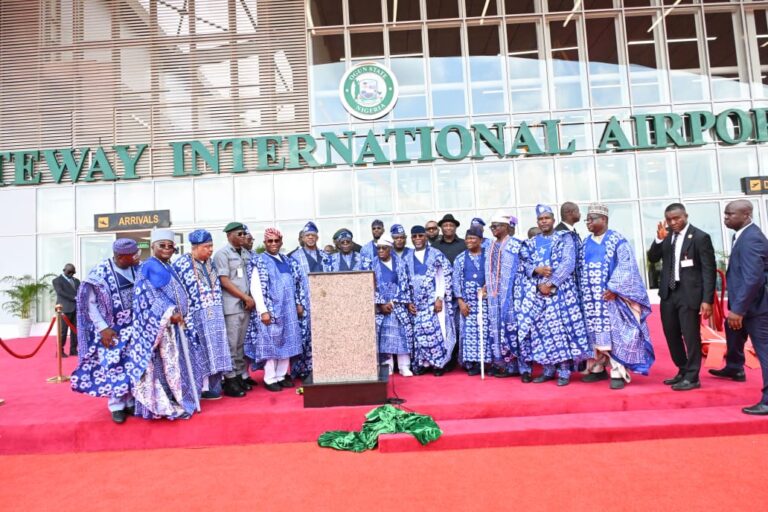
He made the remarks while delivering a speech at the commissioning of the state-owned Gateway International Airport and Ogun State’s aircrafts in Iperu, Ikenne Local Government Area.
The president emphasised that Nigeria is on a path of development and greatness, driven by ongoing reforms in critical sectors of the economy, which have restored investor confidence.
“We will win over banditry and terrorism. I gave you the assurance that we will invest more in our people. Thank God for our youths, they are committed, brilliant and working hard. Nigeria, our country, is resolved to be great and is on the path to greatness once again,” Tinubu said.
The President added, “I sincerely appreciate the opportunity we have today to celebrate the remarkable vision of a governor and his predecessors. Today, we commission the economic nerve centre of our corridor.”
“In less than seven years, you, Dapo Abiodun, have demonstrated commitment, vision, and patriotism to grow Nigeria. We celebrate your contribution to national development. I have no regrets for whatever we have done with you.
“As your President, I am pleased to see that the increase in federal allocations is being effectively and judiciously used to build our country. I congratulate the people of this great state for supporting a government that is delivering measurable progress, and I thank you for your continued faith in our nation.”
Highlighting the people-centered nature of his administration’s investments, Tinubu said, “The Lord is liberating Nigeria from past mismanagement. We are back as a nation, well respected and highly recognized.”
He noted that the Gateway Airport is connected to investments in gas and energy and praised Governor Abiodun’s broader development projects, saying they reflect a commitment to progress that must “touch every level.”
Tinubu also commended Abiodun’s agricultural initiatives and the rollout of 1,000 electric bikes, describing them as “a smart response to modern transportation needs.”
Former President Olusegun Obasanjo, who also attended the ceremony, thanked Tinubu for making the effort to participate and called the event a significant milestone in Ogun State’s history.
He commended Governor Abiodun for building the airport, noting that it is a landmark project.
“I’ve landed here from Abuja, and it took me 45 minutes to reach my home — at least 25 minutes shorter than if I had landed in Lagos. I want to thank our governor for doing us proud. I am happy to witness this historic occasion,” Obasanjo said.
He also recalled being part of the “conspiracy” to create Ogun State 50 years ago and noted that the level of development achieved under Abiodun is beyond what anyone could have imagined.
Senate President Godswill Akpabio lauded Tinubu for reforms that have, in his view, relieved states of salary arrears and other financial burdens. He also commended Governor Abiodun for constructing the Gateway Airport and for the judicious use of increased federal allocations.
Governor Abiodun, visibly elated by the president’s presence, described it as deeply symbolic. He praised Tinubu’s “Renewed Hope Agenda,” saying it has positioned Nigeria as a competitive investment destination and inspired confidence among local and international investors.
He highlighted that when he assumed office, he realized that for Ogun State to maximize its proximity to Lagos, the administration had to close the infrastructure gap.
Over the last seven years, Abiodun said, his government has enhanced trade mobility, expanded infrastructure, and positioned Ogun as one of the fastest-growing economies in Nigeria through deliberate policies that promote economic development.
Abiodun also highlighted accomplishments in transportation, housing, healthcare, energy, agriculture, security, and environmental sustainability.
He noted the construction of over 1,600 kilometers of roads, including the Epe-Ijebu Ode Expressway, Sango-Abeokuta Expressway, Ilishan-Iperu Road, and the Sagamu–Iperu–Ode Remo–Sapade Expressway, now renamed the Bola Ahmed Tinubu Expressway, which serves as a bypass to the Lagos-Ibadan Expressway.
The state has also developed the Muhammadu Buhari Estate, offering 100 semi-detached and fully detached housing units, and over 7,000 affordable homes.
In healthcare, Abiodun pointed to 140 completed and equipped primary healthcare centers and the 200-bed Gateway Medical Centre of Excellence, now affiliated with the Abuja Medical Centre of Excellence, which he said reduces the need for medical travel and positions Ogun as a hub for medical tourism. Energy projects, including the 34.1-megawatt Onijanganjangan Independent Power Project, are supporting industrial growth and economic expansion, while mechanized farming initiatives are strengthening food security across the state.
The administration has also deployed 100 pickup vehicles and other infrastructure to support law enforcement, and introduced electric bikes to promote sustainable urban transportation and mitigate the impact of rising fuel prices.
The commissioning ceremony was attended by governors of Zamfara, Bayelsa, Taraba, Ekiti, Ondo, Niger, and Lagos states, as well as the deputy governors of Oyo and Lagos. Former Ogun State governors Senators Gbenga Daniel and Ibikunle Amosun, Chief Olusegun Osoba, Dr. Olatokunbo Awolowo-Dosumu, Ambassador Femi Pedro, Minister of Culture and Creative Economy Hannatu Musawa, CBN Governor Olayemi Cardoso, Minister of Aviation Festus Keyamo, chairmen of Dangote and BUA Groups, Femi Otedola, Inspector-General of Police Tunji Disu, CEO of Zenith Bank, and Comptroller-General of Customs Bashir Adeniyi were also in attendance. (Channels)
President Bola Tinubu in his Easter message yesterday, urged Nigerians, particularly political leaders to embrace restraint, responsibility and civic maturity ahead of the 2027 general elections, while also assuring citizens of his administration’s commitment to building a safer and more secure nation through intensified efforts to tackle terrorism, banditry, and other security threats.
Also yesterday, the First Lady, Senator Oluremi Tinubu, canvassed for care of the needy and less privileged in society, while Governors and other political leaders charged Nigerians to leverage on the spirit of the season to show love and tolerance for one another.
In his Easter message, addressed to Nigerians at home and abroad, the President acknowledged that, despite the sacrifices of the Armed Forces and other security agencies, challenges to national security have persisted.
Ahead of the 2027 general elections, Tinubu called for political responsibility, restraint, and civic maturity, stressing that the Election Act must guide the conduct of political parties and actors to safeguard democracy, peace, and national stability.
His words: “As the nation gradually approaches another electoral cycle, this season also serves as a call to civic duty and maturity. The Electoral Act must guide the conduct of our political parties and political actors. Let our choices be guided by a shared commitment to peace, continuity, stability, and the long-term good of our country. Democracy flourishes where responsibility, restraint, and informed participation prevail.”
The President expressed optimism that the country is on the path to recovery, citing improving economic indicators as evidence that the right choices are being made.
He, therefore, urged Nigerians to keep faith with the administration’s vision of a safer, stronger and more prosperous nation.
“Fellow Nigerians, you have been very supportive of my administration because you trust our ability to make our nation better. I will continue to serve to retain your trust. I enjoin you to keep the faith and never cease to contribute to the progress and greater future we seek, each in our own way, to the emergence of a democratically stronger, more prosperous, and safer nation,” Tinubu further said.
According to him, the government was making available the necessary resources and strengthening foreign partnerships to enable security agencies to deal decisive blows to terrorists, bandits and other criminal elements.
His words: “Despite the good efforts of the administration and the gallant efforts of our men and women of the Armed Forces who leave behind their families to confront the evil actors in our land, challenges to our security have remained. However, my administration continues to make resources available and forge foreign partnerships to enable us to deal decisive blows to the agents of terror and banditry.”
Tinubu noted that following his condolence visit to Jos, Plateau State, where he commiserated with victims of the recent deadly attack, security chiefs had given strong assurances of progress, while international support was also mobilised to reinforce Nigeria’s response.
He added: “On Thursday, I was in Jos to commiserate with people of Plateau State, share in their grief, and offer reassurances of better days to come. The leaders of the nation’s security institutions have given strong assurances of progress. We have also sought and are receiving assistance from outside our shores.”
He further assured residents of other parts of the country facing one form of insecurity or another that concerted government actions are beginning to produce results, urging citizens to support lawful efforts, remain united, and reject forces that threaten the country’s collective peace and stability.
“I am reassured that the citizens appreciate our efforts. I will continue to remind us of the imperative of unity and oneness. No nation can thrive where fear prevails, and no progress can be sustained without peace.”
The President said no nation can make meaningful progress where fear prevails, assuring communities affected by violence that better days lie ahead.
Tinubu said Easter season symbolises sacrifice, resilience, and the triumph of light over darkness, noting that its message resonates strongly with Nigeria’s present realities as the nation navigates economic stress and security challenges.
Also, wife of the President, Senator Oluremi Tinubu, charged Nigerians to remember the needy in society and extend necessary support to them.
In her Easter message, the First Lady in a four-paragraph release titled ‘The Blessed Hope in Christ’s Resurrection,’ stated, inter alia: “Easter is a reminder of the enduring power of love and the selfless sacrifice of Jesus Christ and the hope His resurrection brings to all humanity.
“As we celebrate Easter with our loved ones, friends, neighbours and communities, let us remember those in need and extend compassion and support wherever we can.
“May the spirit of Easter inspire us to uplift the vulnerable, love one another, make sacrifices when necessary and work together to build a peaceful and prosperous nation for all.” (ThisDay)
President Bola Tinubu, has announced the establishment of a special fund to support members of the Armed Forces, including injured personnel and families of fallen soldiers, as he marked his 74th birthday.
In a statement released on Sunday, the President said he had instructed the Accountant-General of the Federation to open a dedicated account for the initiative.
“On this my 74th birthday, I celebrate the valiant men and women of our Armed Forces,” Tinubu said.
He explained that the fund is intended to provide financial support for service members wounded in active duty as well as the dependents of those who lost their lives in service to the nation.
“Today, I have directed the Accountant-General of the Federation to establish a special account for a fund dedicated to those who serve, those wounded in the line of duty, and the families of those who have paid the ultimate price,” he stated.
Tinubu also pledged to contribute his personal earnings since assuming office as seed funding for the initiative.
“As a personal commitment, all my salaries since assuming office will be paid into this account as seed funding, irrespective of existing insurance and welfare schemes for members of our armed forces,” he said.
He further called on state governors, federal lawmakers, private sector actors, friends, and other stakeholders to support the initiative.
“I call on our governors, members of the National Assembly, the private sector, my friends and all well-wishers to support this initiative. Details of the account will be made available in due course,” the President added.
Tinubu stressed the importance of recognising the sacrifices made by military personnel and their families, describing the initiative as a duty rather than charity.
“We must never forget those who stand in harm’s way for our peace, nor the sacrifices borne by their families. This is not charity. It is duty. And we will fulfil it,” he said.
In the personally signed statement, the President also expressed gratitude to Nigerians for their goodwill messages on his 74th birthday, noting that he deliberately chose a subdued celebration.
He thanked citizens across the country for their prayers and support, saying such goodwill continues to strengthen his administration. (Leadership)
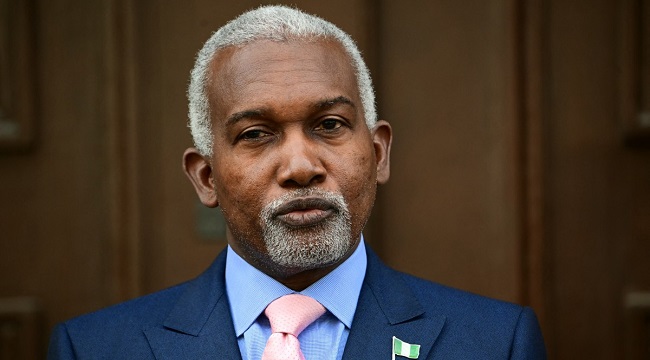
The Minister of Foreign Affairs, Yusuf Tuggar, has resigned.
The minister’s action followed the directive of President Bola Tinubu to all political appointees in his administration who intend to contest elective positions in the 2027 elections to resign from their posts on or before March 31.
The president had hinged his decision on Section 88(1) of the Electoral Act 2026 and the timetable released by the Independent National Electoral Commission (INEC) for party primaries ahead of the 2027 polls.
Tuggar’s resignation comes amid the speculation of his interest in contesting the 2027 Bauchi State governorship election on the platform of the All Progressives Congress (APC).
He is a seasoned diplomat, policymaker, and political figure who was appointed as minister by Bola Ahmed Tinubu in August 2023.
Born on March 12, 1967, he has built a distinguished career spanning diplomacy, politics, energy, and strategic consulting.
He is widely regarded for his role in shaping Nigeria’s global engagement and advancing its foreign policy priorities.
His political career includes serving as a member of the House of Representatives from 2007 to 2011, representing the Gamawa Constituency in Bauchi State.
The diplomat later contested the governorship of the state in two election cycles.
From 2017 to 2023, Tuggar served as Nigeria’s ambassador to Germany, where he played a key role in strengthening bilateral relations, enhancing trade cooperation, and promoting Nigeria’s interests in Europe.
As Minister of Foreign Affairs, Tuggar led Nigeria’s diplomatic efforts under the Tinubu administration. (Channels)
Oluwole Oke, chairman of the house of representatives committee on foreign affairs, says President Bola Tinubu’s two-day official visit to the United Kingdom has repositioned Nigeria on the global stage.
Following an invitation from King Charles III, Tinubu departed Abuja on Tuesday for London, accompanied by his wife and other top government officials.
The state visit, scheduled to end on Thursday, represents the highest level of diplomatic engagement hosted by the British monarchy and marks the first visit of such scale by a Nigerian leader to the UK in 37 years.
Speaking on Channels Television on Wednesday, Oke, who represents Obokun/Oriade federal constituency of Osun state in the green chamber, said beyond economic benefits, Tinubu’s UK visit has elevated Nigeria’s profile internationally.
“This state visit is not just an honour to the President and his family, but to all Nigerians,” he said.
“For the United Kingdom to invite a president on a state visit, they must have strong confidence in our reforms and in the governance under the leadership of President Bola Ahmed Tinubu.”
During the visit, Tinubu is expected to meet with Keir Starmer, UK prime minister, in a high-level bilateral engagement aimed at strengthening ties between Nigeria and Britain.
Reports indicate that a major highlight of the visit is the signing of a £746 million financing agreement between UK export finance, the Nigerian Ports Authority, and the Federal Ministry of Finance.
Oke said at the end of the visit, the British government will be looking forward to numerous opportunities for partnership between the two countries.
He also noted the importance of the maritime deal, which he said, would create jobs and generate huge revenue for the federal government.
“This kind of investment will have linkage effects that will snowball into employment,” he said.
“Participants in that sector will make profits, pay taxes, and, as you know, public finance relies on taxation. So, it is a positive development, and there will be many win-win outcomes. This invitation has further repositioned Nigeria on the global stage.” (TheCable)
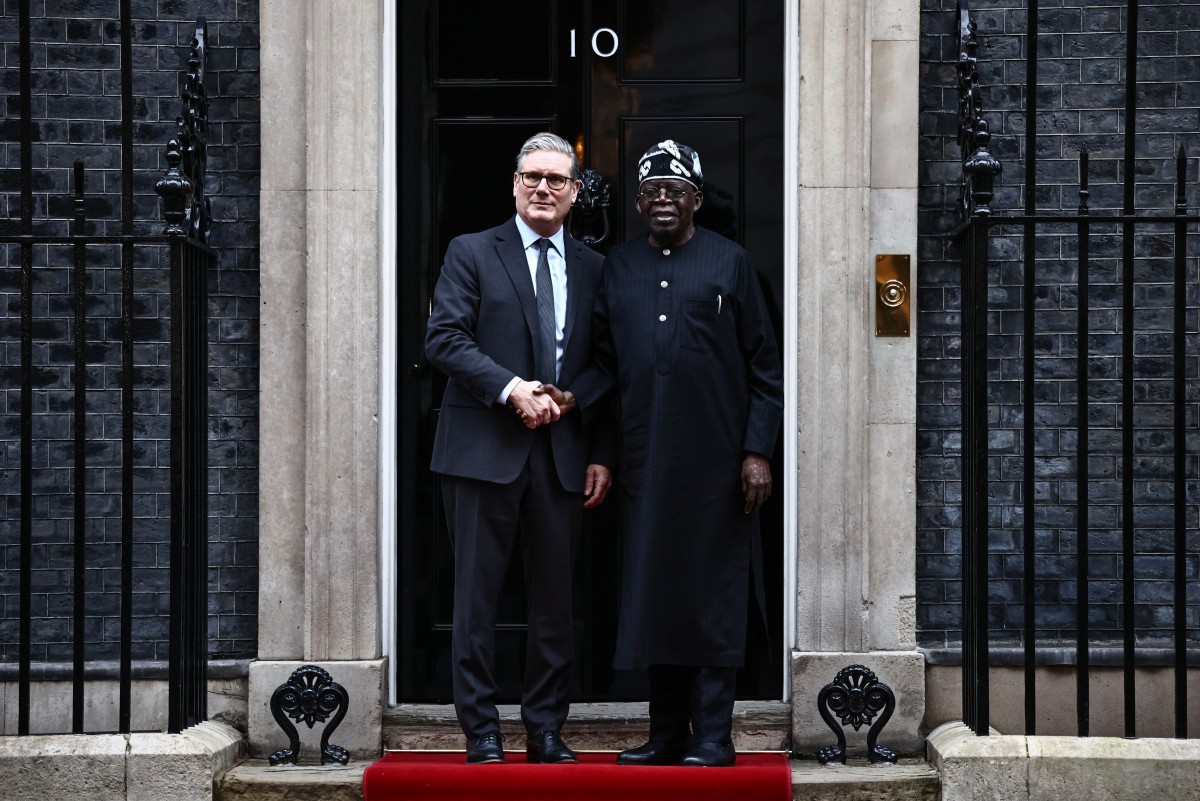
The United Kingdom and Nigeria have sealed new export agreements as both countries committed to taking their economic partnership to another level, UK Prime Minister Keir Starmer said on Thursday.
Starmer made the disclosure during a bilateral meeting with President Bola Tinubu at 10 Downing Street on the second day of the Nigerian leader’s historic state visit to Britain.
“Today is the opportunity to take that to another level with the agreements that we’ve been able to reach on exports, and I think that shows we can go even further than we’ve already gone,” the British Prime Minister stated.
Tinubu, in his remarks, revealed that Nigeria is currently undergoing “very strong reform of the economy” and linked the terrorism challenges facing West Africa to climate change conflict.
“We need more trade agreements and economic relationships that we build between nations. Nigeria is currently going through a very strong reform of the economy,” Tinubu said during the meeting at 10 Downing Street.
The President described Nigeria as facing significant challenges, stating, “The largest country in West Africa, and on the continent, is challenged by terrorism coming from the conflict of climate change.”
Tinubu emphasised that both countries face global economic challenges, noting, “Currently, the entire world is challenged. Nigeria is not immune. Britain is not immune.”
He said the discussions focused on the “economic welfare of the people and how we can work together to improve livelihood” amid economic volatility.
The President affirmed that Thursday’s bilateral discussions would address what Britain can do to “accelerate the friendship, partnership and collaboration” between both nations.
On his part, Prime Minister Starmer described the visit as historic, noting it was the first inward state visit for 37 years by a Nigerian leader.
“The long and shared history between our countries is obvious and much valued, as is the people-to-people contact and engagement that enriches lives here in the United Kingdom,” Starmer said.
He noted that both countries already collaborate on economy, defence, and security matters but expressed determination to deepen the partnership.
“Today is the opportunity to take that to another level with the agreements that we’ve been able to reach on exports,” the Prime Minister stated.
Nigeria became the United Kingdom’s biggest export market in Africa in January 2026, with bilateral trade continuing to expand.
King Charles III had disclosed on Wednesday night at a state banquet that visitors from Nigeria spent £178m in Britain in 2024, while 251,000 people from Britain travelled to Nigeria and spent just as much in return.
The state visit, which began on Wednesday, March 18, saw the signing of several memoranda of understanding and agreements covering trade, investment, defence, and cultural cooperation.
A major outcome already announced is a £746m financing deal involving UK Export Finance, the Nigerian Ports Authority, and the Ministry of Finance for the refurbishment of Lagos Port Complex (Apapa) and Tin Can Island Port.
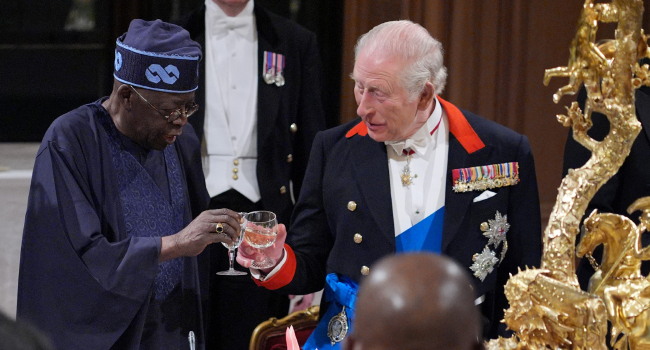
The bilateral meeting at Downing Street followed Wednesday night’s state banquet at Windsor Castle, where King Charles III acknowledged “painful marks” in the shared history between both nations while praising Nigeria’s transformation and the contributions of the Nigerian diaspora to British society.
The state visit, the first by a Nigerian president since 1989 when former military leader Ibrahim Babangida was hosted by Queen Elizabeth II, concludes on Thursday with President Tinubu expected to return to Nigeria. (Punch)
President Bola Tinubu has recalled how he found refuge in the United Kingdom during Nigeria’s pro-democracy struggle, stating that British authorities once placed his residence under police protection amid threats from agents of the military regime.
Tinubu made the remarks on Wednesday during a state banquet hosted by King Charles III at Windsor Castle.
In his address, the Nigerian leader expressed gratitude to the UK for its support during the years of military rule.
“Your Majesty, I wish to express Nigeria’s deep gratitude to this great nation for the refuge and support it extended during the dark years of military dictatorship.
“Like many Nigerians involved in the pro-democracy struggle, I found safety here, and I recall that my residence was placed under Metropolitan Police surveillance for protection following threats from agents of the junta,” he said.
He added that such solidarity remains significant, noting it was “deeply humbling” to return as President of a democratic Nigeria.
igeria’s pro-democracy struggle reached its peak in the 1990s following the annulment of the June 12, 1993 presidential election won by Moshood Abiola under the regime of Ibrahim Babangida. The decision triggered widespread protests and resistance.
Repression intensified during the rule of Sani Abacha, marked by arrests, assassinations, and the execution of Ken Saro-Wiwa and the Ogoni Nine, drawing international condemnation.
Sustained pressure from pro-democracy groups, including civil society organisations and the media, eventually paved the way for a transition to civilian rule under Abdulsalami Abubakar in 1999, ushering in the Fourth Republic with Olusegun Obasanjo as President.
The legacy of the struggle endures, notably through the recognition of June 12 as Democracy Day and ongoing efforts to honour its key figures.
Tinubu also highlighted Nigeria’s current security challenges, particularly terrorism linked to instability in the Sahel, stressing the importance of continued cooperation with the UK.
“Our West African region faces complex terrorism challenges with roots in the Sahel. Nigeria carries an enormous responsibility to help safeguard regional stability.
“In confronting these threats, partnership with the United Kingdom remains essential,” he said, adding that he looked forward to meeting Prime Minister Keir Starmer.
The President further expressed confidence in the future of bilateral relations, noting that both countries share a commitment to progress, mutual respect, and common values.
He also pointed to Nigeria’s role within the Commonwealth of Nations as a platform for strengthening ties.
Reflecting on historical and institutional links, Tinubu acknowledged the influence of British legal and political traditions on Nigeria’s governance system, including its courts, parliamentary structures, and civil service.
He also praised the contributions of Nigerians in the UK, describing them as the “strongest bridge” between both nations, particularly in sectors such as healthcare, business, technology, and the arts. (Channels)

 English