Posted on Leave a comment

Norway beats Ivory Coast 2-1 to set up last-16 Brazil clash

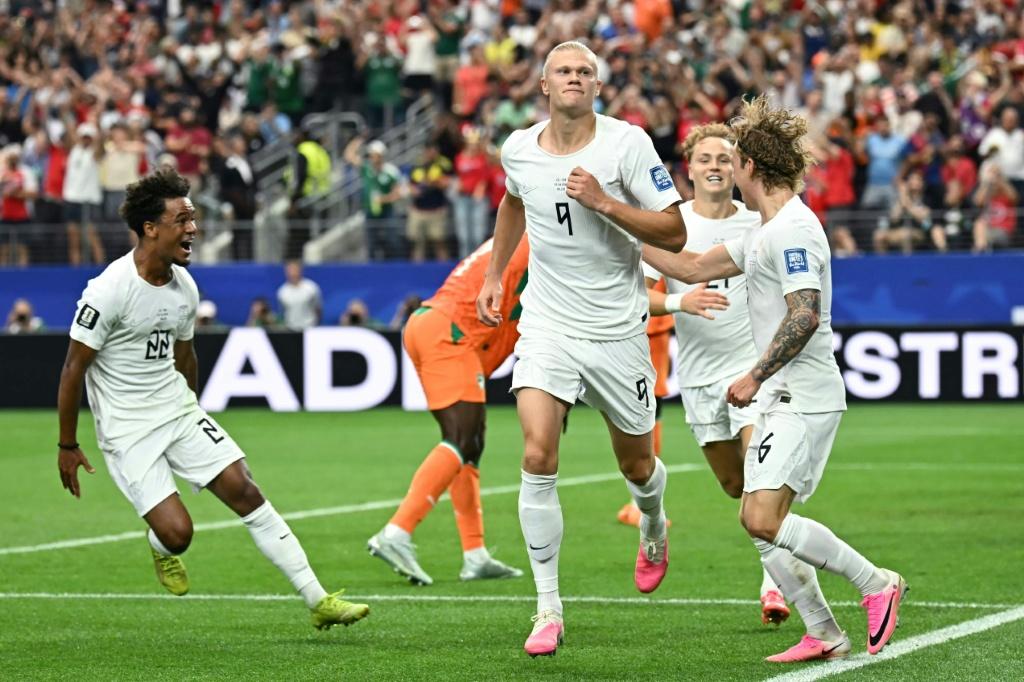
Erling Haaland scored a late winner as Norway set up a last-16 showdown with Brazil at the World Cup after taming the Ivory Coast 2-1 in Texas on Tuesday.

The Manchester City striker prodded in from close range, the ball dribbling in on 86 minutes for his fifth goal of the tournament.

It was the first time that Norway had won a knockout game in the history of the competition and Haaland looked emotional afterwards.

After an even first half that was slow to get going, Antonio Nusa fired Norway into the lead six minutes before the break with one of the goals of the tournament.

Manchester United’s Amad Diallo was sent on for the Ivory Coast and was immediately in the thick of it, stopping a certain second Norway goal and then grabbing a terrific equaliser on 74 minutes.

With extra time looming, predator supreme Haaland got on the end of a cross by Patrick Berg to make some Norwegian history.

They face five-time champions Brazil on Sunday in New Jersey with the quarter-finals at stake.

Norway captain Martin Odegaard said that with Haaland they always had a chance.

“Meeting Brazil in the World Cup is as big as it can be,” said the midfielder, who will face Arsenal teammates Gabriel and Gabriel Martinelli. “It’s amazing to have him (Haaland) in the team, we’re lucky to have him and it’s just about giving him as many opportunities as possible.”

Diallo said they gifted Norway the winner by failing to pick up Haaland in the box.

The center forward has scored in each of his last 13 competitive internationals, hitting 25 goals along the way.

“When you leave Erling Haaland alone in a match, you pay the price,” said Diallo. “We’re a little disappointed because we thought we could go further in this competition.

“But we’re also proud of ourselves because we’ve accomplished something that previous generations perhaps hadn’t managed.”

A match between two physical teams was tepid to begin with at the impressive air-conditioned home of the Dallas Cowboys.

The Ivory Coast players and fans were irate just before the drinks break when the livewire Yan Diomande was brought down on the break just inside his own half.

Referee Jesus Valenzuela surprisingly did not even book defender David Moller Wolfe.

The 19-year-old winger Diomande, who appears set to join European champions Paris Saint-Germain from RB Leipzig, was growing into the game.

The African side, one of the youngest at the tournament, were on top and particularly threatening down Diomande’s left-hand side of the pitch. (JapanToday)
Posted on Leave a comment

Martinelli scores late as Brazil beat Japan 2-1, into World Cup last 16

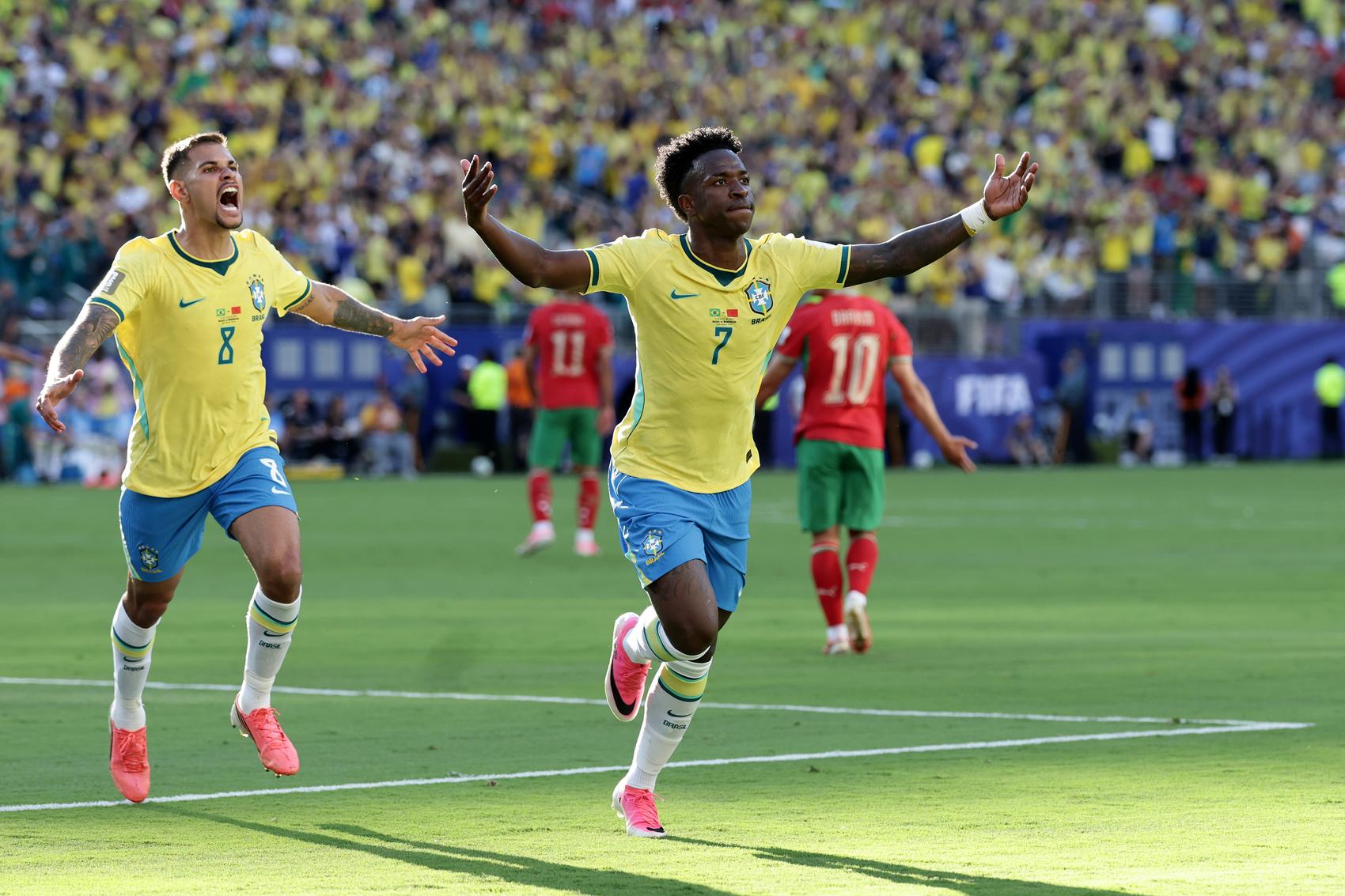
Gabriel Martinelli scored the winner late in injury time to give five-time champions Brazil a 2-1 win over Japan in the World Cup round of 32 in Houston.

Martinelli, who had come on as a second-half substitute, scored in the sixth minute of stoppage time as the match on Monday appeared to be heading to extra time.

Brazil will next face either the Ivory Coast or Norway on Sunday in East Rutherford, New Jersey, in the round of 16.

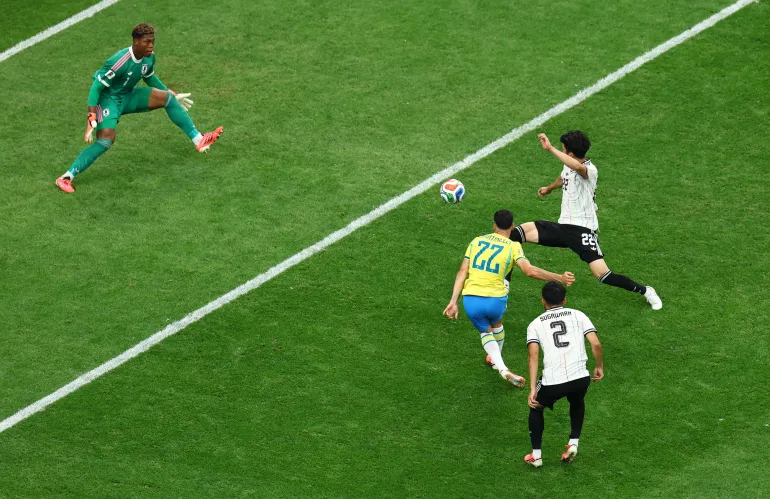
Casemiro had earlier equalised with a header in the 56th minute off an assist from Gabriel Magalhaes after just missing another chance two minutes earlier. The shot sailed just out of reach of the outstretched hand of Japan goalkeeper Zion Suzuki and into the net.

Kaishu Sano stole a misplaced pass in midfield before his right-footed shot from above the half-circle put Japan ahead after 29 minutes.

Vinicius Junior, who has scored four goals so far in the tournament, had a chance to put Brazil on top in the 58th minute, but his shot from the left was deflected by goalkeeper Suzuki and went past the far post.

Brazil had two chances to even the score early in the second half before breaking through late on. First, Suzuki blocked a header from Bruno Guimaraes in the 52nd minute. Soon after, Casemiro’s header bounced off a defender’s head and Suzuki’s face.

Japan have never won a World Cup knockout match.The win was Brazil’s 12th in 15 games against Japan.

The teams have also played to two draws, while Japan got their first win in the series in a friendly in Tokyo in October.

This was a match-up between two countries with deep ties, Brazil being home to about 2.7 million Japanese descendants, which is the largest Japanese population outside of Japan.

Those ties extend to football, where Brazil superstar Zico moved to Japan in 1991 to play for Kashima Antlers and help build Japan’s professional football network.

He coached the Japan national team from 2002–06, leading the team to the World Cup in 2006.That team lost to Brazil 4-1 in the only previous meeting between the teams at the World Cup.

Brazil won Group C after a draw with Morocco and victories over Haiti and Scotland.

Monday’s victory came on the anniversary of their first World Cup championship in Sweden in 1958, when a 17-year-old Pele scored two goals in the final against the host country.

Japan reached the round of 32 as runner-up in Group F after draws with the Netherlands and Sweden and a win over Tunisia. The loss snaps a 10-game unbeaten streak dating back to a 2-0 defeat to the United States in September. (AlJazeera)

Posted on Leave a comment

Brazil rallies for 1-1 draw against Morocco in its World Cup opener

Samba soccer this wasn’t.

Facing pressure to win its first World Cup title since 2002, five-time champion Brazil was outplayed early and needed Vinícius Júnior’s 32nd-minute goal to gain a 1-1 draw against Morocco on Saturday in a pulsating, high-profile group match.

“We started on a really bad note,” Vinícius said. “For certain, we got to hold on to the ball. We have to move better.”

A semifinalist four years ago, Morocco had 12 shots in the first 30 minutes and went ahead on Ismael Saibari’s 21st-minute goal, a chip over goalkeeper Alisson Becker.

“The team was a bit anxious at the beginning. Nerves were all over the place,” Brazil coach Carlo Ancelotti said through a translator. “A very imbalanced team.”

Brazil evened the score 11 minutes later. Vinícius exchanged passes with Bruno Guimarães on the left flank, took a few touches to cut around Neil El Aynaoui and rifled a right-footed shot past the outstretched arm of Yassine Bounou for his 10th international goal.

“We are satisfied with the draw,” Morocco coach Mohamed Ouahbi said. “We are not euphoric.”

Fans in Brazil’s canary yellow dominated the crowd of 80,663 at MetLife Stadium — only about five sections near the south goal had fans in Morocco’s red.

Seleção supporters expected the flowing, entertaining play of Pelé’s era and were subdued before Vinícius evened the score with his spectacular angled effort.

Brazil extended its unbeaten streak in World Cup openers to 21, including 17 wins, since a 1934 loss to Spain. No. 6 Brazil and seventh-ranked Morocco are the only top 10 teams to meet in the first round of the expanded 48-nation World Cup tournament.

“We cannot lose heart,” Ancelotti said. “You don’t win a World Cup based on your first match.”

Brazil plays Haiti on Friday in Philadelphia, then closes Group C against Scotland in Miami Gardens, Florida. Morocco faces Scotland in Foxborough, Massachusetts, on Friday, then meets Haiti in Atlanta.

Brazil star Neymar, recovering from a torn right calf, didn’t dress for the game.

One hour before the match, an Uber from Times Square to the stadium, site of next month’s final, was $126.95 — up from $83.95 for advance booking for the same time Sunday.

Ancelotti, the Italian who became Brazil’s first foreign World Cup coach, wore a three-piece suit with a necktie on a sunny afternoon with a 88-degree Fahrenheit (31-degree Celsius) temperature for the 6 p.m. start.

Morocco went ahead after Lucas Paquetá lost control of a short pass from Roger Ibañez and knocked it off Bilal El Khannouss. It bounced to Noussair Mazraoui, who sent the ball to Brahim Díaz in the center circle. (Japan Today)

Posted on Leave a comment

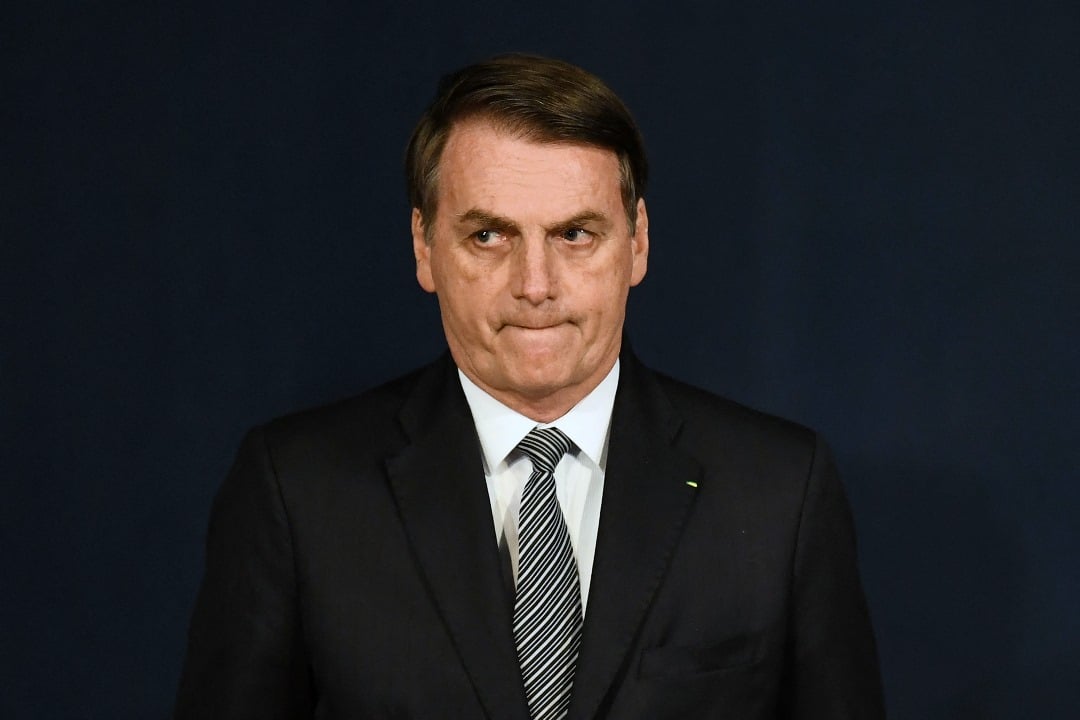
Ex-Brazil president Bolsonaro begins 27-year jail term

Brazil’s Supreme Court on Tuesday ordered far-right former president Jair Bolsonaro to begin serving a 27-year sentence for plotting a failed coup, after he exhausted all appeals.

The brash former army captain who fired up Brazil’s right and reshaped the country’s politics is ending a divisive career jailed in a small room at police headquarters equipped with a TV, mini-fridge, and air-conditioning.

Bolsonaro, 70, was convicted in September over a scheme to stop Luiz Inácio Lula da Silva from taking office after the 2022 elections that included a plot to kill the veteran leftist.

Prosecutors said the scheme failed only due to a lack of support from military top brass.

The Supreme Court rejected an appeal to his sentence earlier this month and, on Tuesday, ruled the judgement was now final, with no further challenges allowed.

The court also ordered a military tribunal to decide whether Bolsonaro should be stripped of his captain’s rank.

Bolsonaro had been under house arrest until Saturday, when he was detained at police headquarters in the capital, Brasilia, for tampering with his ankle monitor using a soldering iron.

Supreme Court judge Alexandre de Moraes said there had been “very serious indications of a possible attempt to flee” during a planned vigil organised by Bolsonaro’s son outside his home.

The justice pointed to the location of the nearby US embassy and Bolsonaro’s close relationship with US President Donald Trump, suggesting he may have tried to escape to seek political asylum.

During a hearing on Sunday in Brasilia, Bolsonaro stated he “experienced a certain paranoia” due to medications he was on and that he had no intention of fleeing.

Earlier, Bolsonaro had claimed he used a soldering iron on the monitoring bracelet out of “curiosity”.

The court ruled Bolsonaro will remain detained in the officers’ room — a secure space for protected prisoners — where he is currently held in Brasilia. (Punch)

Posted on Leave a comment

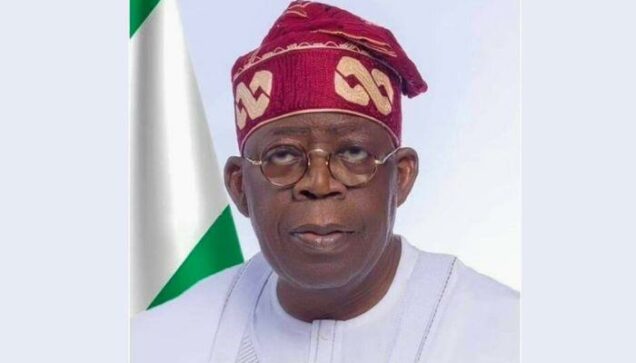
Tinubu returns after Japan, Brazil trips

President Bola Ahmed Tinubu returned to Abuja around 1:20am on Thursday after concluding a three-day state visit to Brazil that yielded a raft of bilateral agreements and high-level engagements aimed at deepening Nigeria’s economic and diplomatic ties with South America’s largest economy.

The President, who arrived aboard the presidential jet, was received at the Presidential Wing of the Nnamdi Azikiwe International Airport by a high-powered delegation of political leaders and senior government officials.

Among those present were Governors Caleb Mutfwang (Plateau); Uba Sani (Kaduna); Hope Uzodinma (Imo) and AbdulRahman AbdulRazaq (Kwara).

Also on hand to welcome the President were Speaker of the House of Representatives, Tajudeen Abbas; Deputy Senate President, Barau Jibrin; Chief of Staff to the President, Femi Gbajabiamila; National Security Adviser, Nuhu Ribadu; and some Ministers, including Nyesom Wike (FCT); Abubakar Atiku Bagudu (Budget and Economic Planning) and Bello Matawalle (Defence, State).

President Tinubu’s visit to Brazil was marked by the signing of five Memoranda of Understanding (MoUs) covering aviation, trade, science, diplomacy, and finance. 

At a joint press conference in Brasília, he welcomed the imminent return of Petrobras, Brazil’s state-owned oil giant, to Nigeria—five years after it halted its joint ventures. 

“We have the largest gas repository. So I don’t see why Petrobras doesn’t join as a partner in Nigeria as soon as possible. I appreciate President Lula’s promise that this will be done,” he said.

The agreements also included a Bilateral Air Services Agreement, paving the way for direct flights between Lagos and São Paulo, to be operated by Air Peace. 

Other MoUs targeted political consultations, scientific collaboration, and agricultural financing through Nigeria’s Bank of Agriculture and Brazil’s National Bank for Economic and Social Development.

Beyond the MoUs, President Tinubu underscored his administration’s economic reforms, assuring Brazilian investors of a stable, transparent financial climate. 

He cited Nigeria’s capital market growth as evidence of renewed investor confidence and pledged continued reforms to “unlock capital, protect investors, and drive innovation.”

In a meeting with Nigerians in Brazil, Tinubu called on the diaspora to contribute actively to nation-building, pledging technology-driven development and food security as the pillars of a prosperous future. 

“We must bring Nigeria to the forefront of Africa’s progress, driven by technology, food sovereignty, and the courage to change our destiny,” he told the gathering.

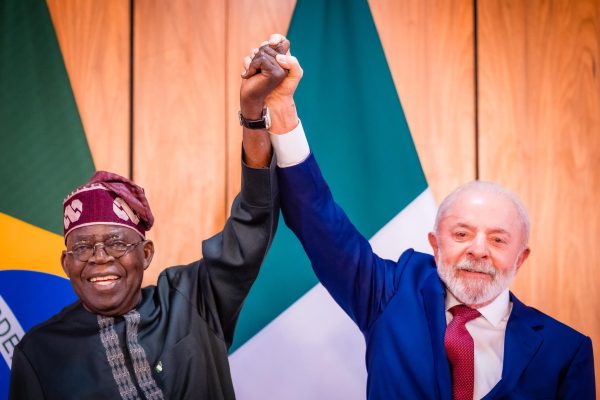
The visit, which featured red-carpet honours, bilateral meetings with President Luiz Inácio Lula da Silva, and cultural engagements, signalled what both leaders described as a new era in Nigeria–Brazil relations.

Tinubu’s state visit to Brazil was preceded by his participation at the recently concluded ninth edition of the Tokyo International Conference on African Development (TICAD9). (Nation)

Posted on Leave a comment

Tinubu, Lula sign five MoUs as Petrobras returns to Nigeria

Brazilian state-owned oil giant Petrobras is set to resume operations in Nigeria five years after it exited joint venture activities in the country, following the signing of five strategic Memoranda of Understanding (MoUs) between Nigeria and Brazil to strengthen trade, diplomacy, science, aviation, and finance cooperation.

The announcement was made during President Bola Tinubu’s State Visit to Brazil, where he met with Brazilian President Luiz Inácio Lula da Silva.

President Tinubu at a joint press conference in Brasília said Petrobras’ return would reignite economic cooperation in the energy sector between the two countries.

“We have the largest gas repository. So I don’t see why Petrobras doesn’t join as a partner in Nigeria as soon as possible. I appreciate President Lula’s promise that this will be done as soon as possible,” Tinubu said.

Tinubu praised President Lula’s commitment to revitalising the partnership between the two countries, noting that Nigeria’s economic space remains a virgin land, full of opportunities for Brazilian companies.

He also praised Brazilian aircraft manufacturer Embraer for its growing footprint in Nigeria, particularly its plans to establish a regional service hub to support the country’s growing airline industry.

Tinubu recalled his previous engagements in Brazil and emphasised the urgency of moving beyond symbolic ties to concrete economic cooperation.

He said; “Honourable Ministers of both countries, members of the Brazil Business Group, I have listened carefully to my friend, President Lula. We had a lengthy discussion. We talked about history and about African and Brazilian heritage.

“We tried to see why we are not at the level we wanted. We have allowed some problems and activities in the past to deter us from making progress and fulfilling our promises. But today we say that is the end of that.

“This is my third visit to the country. First, the visit to attend the G20. Second, on climate change, BRICS. And today, an official and state visit was very emotional.”

Tinubu also noted Nigeria’s readiness to partner with Brazil on technology transfer, food security, manufacturing, and renewable energy.

He added; “Today, we are fighting and working hard to bring our sovereignty to the level of expectation that we as a nation, the most populous, the most dynamic country, Nigeria, share with Brazil. We need to share—technology transfer, energy, economy—so that Brazil can continue to widen the opportunities for us to embrace Africa. Africa is the new frontier.

“There is no other way to do it than to embrace it with technology, fast development, research, food sovereignty, and manufacturing.”

The president also stressed the need for investment and knowledge exchange on healthcare and pharmaceuticals, stating that “We have elevated this promise to the path of reality, as you have seen in various MOUs. I don’t know why the manufacturing of generic drugs, which Brazil has done deeply and far, cannot be in Nigeria.

‘I don’t see why the technological superiority of Brazil is not shared with Africa. We assured each other that only we can develop our economies to help our sovereignty.”

On domestic reforms, Tinubu assured Brazilian investors that Nigeria’s economic transformation is yielding results, noting that “the reforms I’ve embarked upon since I took over in Nigeria have been very impactful. It was initially painful, but today the result is blossoming.”

“It’s getting clearer to the people. We have more money for the economy, and there will be no more corruption. We have the governor of the Central Bank of Nigeria here. You don’t have to know him before getting the foreign exchange you need. The speculators are out. In our currency market, the door is open for businesses,” he added. (Guardian)

Posted on Leave a comment

Tinubu departs Japan for Brazil after TICAD9 engagements

President Bola Tinubu departed Yokohama, Japan, on Thursday night for Brazil, where he is scheduled to commence a state visit on August 24, according to a statement issued by the Special Adviser to the President on Information and Strategy, Bayo Onanuga.

Onanuga, in a release dated August 22, 2025, said the President will make a stopover in Los Angeles before continuing to Brasilia, the Brazilian capital.

“President Tinubu will continue his diplomatic engagements in Brazil after successfully attending the ninth Tokyo International Conference for African Development (TICAD9),” the statement read.

The President embarked on his two-nation tour on August 15, leaving Abuja with a brief stopover in Dubai, UAE, before arriving in Yokohama on August 18.

During his stay in Japan, Tinubu participated in the opening ceremony and plenary of TICAD9 on August 20 and held bilateral meetings with key partners.

The visit culminated in an interactive session with Nigerians in the diaspora on Thursday night.

“The engagements have been productive, and the President is now set to build on these discussions with strategic cooperation in Brazil,” Onanuga added.

Tinubu arrived in Tokyo, Japan, in the early hours of August 20 for a series of official engagements at the Ninth Tokyo International Conference on African Development (TICAD9) in Yokohama, held from August 20 to 22.

The conference, co-hosted by Japan, the United Nations, UNDP, the African Union Commission, and the World Bank, focused on Africa’s economic transformation, private investment, innovation, and creating a resilient and sustainable society.

Tinubu held bilateral meetings and engaged with Japanese companies investing in Nigeria before departing for Brazil. (Punch)

Posted on Leave a comment

More than 60 countries scramble to respond to Trump’s latest tariffs

More than 60 countries around the world are scrambling to respond to the latest wave of US tariffs announced by Donald Trump, which came into force on Thursday.

Industry representatives in rich and poor countries warned of job losses as the tariffs upended a decades-old world trading system with rates ranging from 10% to 39%, 40% and 41% for Switzerland, Brazil and Syria.

All over the globe, leaders were attempting to put contingencies in place after Trump’s tariff threats turned to reality at a minute past midnight Washington time.

The Brazilian government said it was planning a state aid plan for companies affected. The president, Luiz Inácio Lula da Silva, said the duties were “unacceptable blackmail”.

Switzerland said it was seeking new talks with the US after a last-gasp mission to Washington by its president, Karin Keller-Sutter, failed to stop a 39% tariff blow that industry group Swissmem described as a “horror scenario”.

In a statement after an emergency meeting with Keller-Sutter, the Swiss cabinet said the tariffs would “place a substantial strain on Switzerland’s export-oriented economy”.

“For the affected sectors, companies and their employees, this is an extraordinarily difficult situation,” Keller-Sutter told reporters.

Taiwan is also continuing talks with the US. Its president, Lai Ching-te, said the 20% rate imposed on the key Washington ally was “temporary”.

Ireland, which is locked into an EU-US deal setting the tariff ceiling at 15%, said it would publish a new plan for diversifying an economy that relies heavily on US multinationals including Intel, Pfizer and Johnson & Johnson, all in Trump’s crosshairs.

Despite a last minute reprieve from Trump for Lesotho with tariffs dropping from 50% to 15%, the impoverished African nation said it was already hurting.

Textile industry players in the country – which produces jeans and other garments for US companies including Levi and Walmart – said the uncertainty around tariffs over the past few months had already devastated the sector, with orders cancelled and jobs cut.

Laos, which, like Brazil and Myanmar, was hit with a 40% rate, was among those handed a steep increase in import duties because of a trade imbalance with the US.

“A 40% tariff is just a nail in the coffin for any industry trying to ship to the United States,” Johannes Somers, the executive chair of the garment manufacturing firm Diep Vu, told Agence France Presse.

“We estimate about 20,000 workers or more could be impacted,” added Xaybandith Rasphone, the head of the Association of the Lao Garment Industry.

The sweeping “reciprocal” rates were announced by the White House a week ago, just before a previous 1 August deadline was due to elapse.

Just before the tariffs came into effect at midnight, Trump claimed on social media that billions of dollars would start flowing into the US as a result.

However, while the customs duties make countries’ exports more expensive and less competitive, they are payable on import and usually passed on to the customer.

“The only thing that can stop America’s greatness would be a radical left court that wants to see our country fail,” the president wrote in capital letters, referencing an ongoing case in the US court of appeals, which is considering whether he exceeded his authority in imposing the tariffs.

Some trading partners had already secured reductions through negotiations or by striking deals, including the UK, Thailand, Cambodia, Vietnam, Indonesia, the Philippines, Japan, South Korea, Pakistan and the EU.

The EU is the only trading partner where its baseline rate of 15% will include previous tariffs. It means, for example, cheeses that are normally hit with import duties of 14.9% will be taxed at 15% and not 29.9%.

However, the deal has only been implemented in part with tariffs of 27.5% still being imposed on EU car imports while the details of the US-EU deal are being finalised.

Hildegard Müller, the president of the German car industry federation, said the EU-US deal had “brought no clarity or improvement” to the industry.

“The sectoral tariffs on cars and automotive parts of 27.5%, which have been in effect since April and May respectively, remain in place and place a significant burden on German automakers and automotive suppliers, as well as on transatlantic trade.

“It is important that the promised agreement is reached now and the relief measures are implemented promptly,” she said.

India’s 25% tariff rate could rise to a total of 50% after Trump signed an executive order on Wednesday imposing an additional levy in retaliation for the country’s purchase of oil from Russia. Delhi has 21 days to respond. Trump has threatened to use the same tactic on other countries that supply Russia. (Guardian)

Posted on Leave a comment

Brazil beat Colombia in hard-fought final to defend Women’s Copa

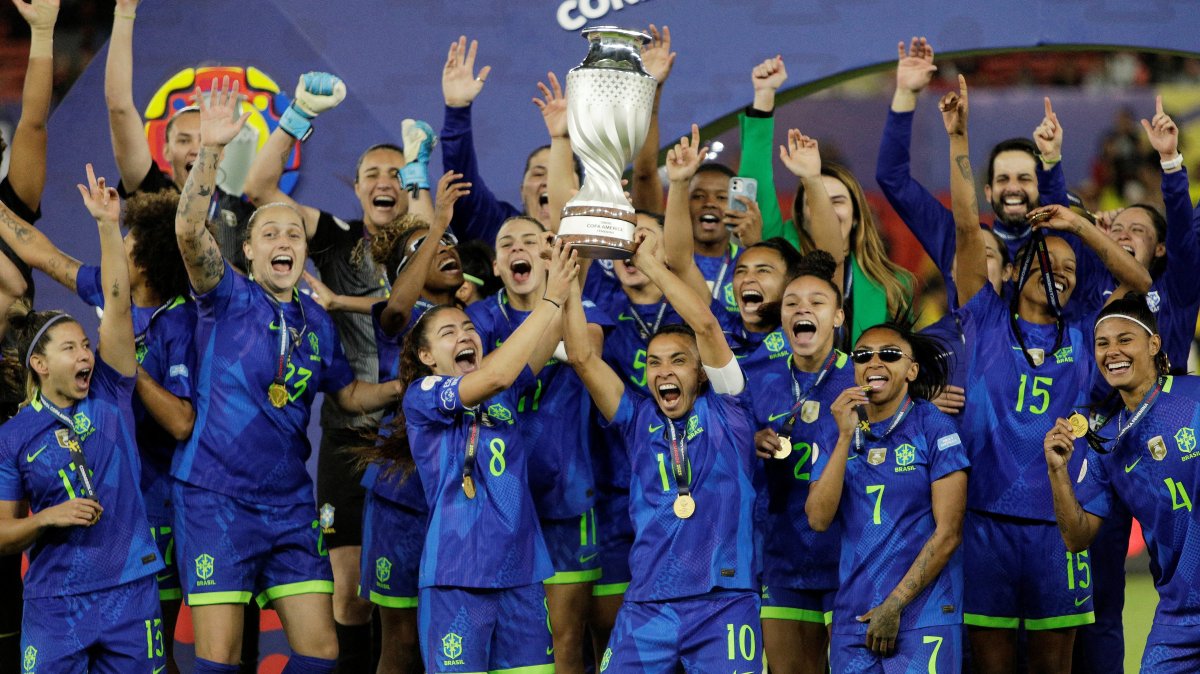
Brazil clinched their ninth Women’s Copa America title Saturday, edging Colombia 5-4 in a penalty shootout after a dramatic 4-4 draw in the Quito final.

The decider at the Estadio Rodrigo Paz Delgado saw Colombia take the lead three times, only for Brazil to respond on each occasion.

Brazil great Marta forced extra time with a late equalizer and the veteran struck again in the 105th minute to seemingly seal the victory.

But a resilient Colombia found yet another equalizer to send the encounter to penalties, where Brazil’s experience ultimately prevailed.

“I think women’s football has been growing a lot. I think the trend is for it to be more competitive. Everyone here deserved a match like this. Congratulations to Colombia too,” Brazil’s Amanda Gutierres said.

“This means a lot. I think it’s Brazil’s job. It’s that mentality of never giving up. That’s a source of pride for Brazil. I think it means a lot to Brazilians.”

Both teams created early chances, but the breakthrough came in the 25th minute when Colombia’s Linda Caicedo capped off a tidy passing move with a composed low finish from close range.

Brazil got the equalizer in the dying moments of the first half when Angelina stepped up to calmly convert a penalty after VAR confirmed a foul by Jorelyn Carabali on Gio Garbelini.

Colombia regained the lead in the 69th minute via a Brazil own goal, defender Tarciane attempting a routine back pass to goalkeeper Lorena but unaware that she had already charged off her line to collect the ball.

Gutierres equalized for Brazil again 10 minutes from time with her sixth goal in the tournament, a fierce strike off Garbelini’s pass, but striker Mayra Ramirez restored Colombia’s lead by netting after a quick counter-attack eight minutes later.

“Las Cafeteras” were within touching distance of their first continental title until Marta, introduced as a late substitute, delivered a moment of magic with a stunning equalizer six minutes into stoppage time, forcing the game into extra time.

Marta struck again in the 105th minute when she tapped in a fine cross from Angelina, but Colombia turned things around again as Leicy Santos’ brilliant free kick sailed into the top corner in the 115th minute.

The penalty shootout mirrored the drama of the match, with Colombia taking the early advantage after Angelina’s miss.

However, when Manuela Pavi failed to convert and goalkeeper Lorena saved Leicy Santos’ effort as Brazil held the advantage.

Marta had the chance to seal victory, but Katherine Tapia’s save sent the shootout to sudden death, where Carabali’s miss finally handed Brazil their ninth continental title. (DailySabah)

Posted on Leave a comment

Brazil vows to match US tariffs after Trump threatens 50% levy

Brazilian President Luiz Inácio Lula da Silva has said he is ready to match any tariffs imposed on Brazil by the United States.

Lula was responding to Wednesday’s threat by his US counterpart, Donald Trump, to impose a 50% import tax on Brazilian goods from 1 August.

In a letter, Trump cited Brazil’s treatment of former President Jair Bolsonaro as a trigger for tariff-hike.

Bolsonaro is currently on trial for allegedly attempting to stage a coup against Lula after being defeated by him in the 2022 election.

Trump referred to Bolsonaro as “a highly respected leader throughout the world”. “This Trial should not be taking place,” he wrote, calling on Brazil to immediately end the “witch hunt” against the former president.

Trump’s support for Bolsonaro does not come as a surprise as the two men have long been considered allies.

The US president had already slammed Brazil for its treatment of Bolsonaro on Monday, comparing it to the legal cases he himself had faced in US courts.

The 50% tariff threat was met with a robust and lengthy response by President Lula.

In a post on X, he stressed that Brazil was “a sovereign country with independent institutions and will not accept any tutelage”.

The Brazilian leader also announced that “any unilateral tariff increases” would be met with reciprocal tariffs imposed on US goods.

The US is Brazil’s second-largest trade partner after China, so the hike from a tariff rate of 10% to an eye-watering 50% – if it comes into force – would hit the South American nation hard.

But Lula also made a point of challenging Trump’s assertion that the US had a trade deficit with Brazil, calling it “inaccurate”.

Lula’s rebuttal is backed up by US government data, which suggests the US had a goods trade surplus with Brazil of $7.4bn (£5.4bn) in 2024.

Brazil is the US’s 15th largest trading partner and among its main imports from the US are mineral fuels, aircraft and machinery.

For its part, the US imports gas and petroleum, iron, and coffee from Brazil.

Brazil was not the only country Trump threatened with higher tariffs on Wednesday.

Japan, South Korea and Sri Lanka were among 22 nations which received letters warning of higher levies.

But the letter Trump sent to his Brazilian counterpart was the only one focussing matters beyond alleged trade deficits.

As well as denouncing the treatment of ex-President Bolsonaro, Trump slammed what he said were “secret and unlawful censorship orders to US social media platforms” which he said Brazil had imposed.

Trump Media, which operates the US president’s Truth Social platform and is majority-owned by him, is among the US tech companies fighting Brazilian court rulings over orders suspending social media accounts.

Lula fought back on that front too, justifying the rulings by arguing that “Brazilian society rejects hateful content, racism, child pornography, scams, fraud, and speeches against human rights and democratic freedom”. (BBC)