
Posted on Leave a comment

Tinubu’s presidential pardon undermines justice, emboldens criminality – Atiku

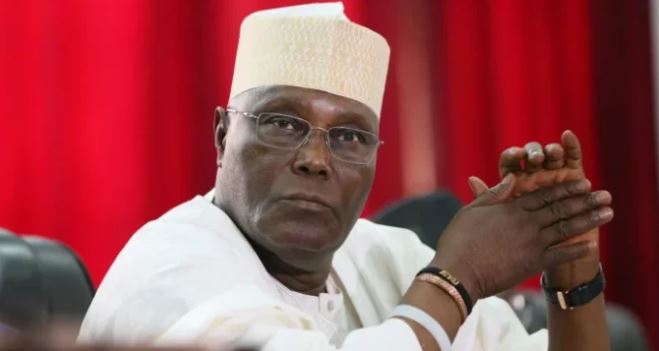
Former Vice President, Atiku Abubakar, has openly condemned President Bola Tinubu’s latest use of the presidential pardon, describing it as a reckless action that undermines the principles of justice and accountability.

In a statement posted on his X handle on Sunday, Atiku Abubakar noted that the presidential prerogative of mercy is intended to balance justice with compassion.

However, he criticised the most recent round of pardons, saying it has reduced the process to a mere triviality.

President Bola Tinubu, on Thursday, granted clemency to 175 convicts and former convicts, including notable figures such as the late Major General Mamman Vatsa, Major Akubo, Professor Magaji Garba, Maryam Sanda, Ken Saro-Wiwa, and the other members of the Ogoni Eight.

According to a statement from the Presidency, the decision was based on recommendations from the Presidential Advisory Committee on the Prerogative of Mercy, chaired by the Attorney-General of the Federation and Minister of Justice, Lateef Fagbemi (SAN).

The presidential pardon also extended clemency to individuals convicted of various serious crimes, including homicide, illegal mining, and fraud.

Reacting to this, Atiku condemned the inclusion of such offenders, arguing that it undermines public confidence in the criminal justice system and, in his words, “emboldens criminality.”

He maintained that the exercise of clemency should never serve as an accomplice to crime or erode the foundations of justice.

“Ordinarily, the power of presidential pardon is a solemn prerogative, a moral and constitutional instrument designed to temper justice with mercy and to underscore the humanity of the state. When properly exercised, it elevates justice and strengthens public faith in governance.

“Regrettably, the latest pardon issued by the Tinubu administration has done the very opposite. The decision to extend clemency to individuals convicted of grave crimes such as drug trafficking, kidnapping, murder, and corruption not only diminishes the sanctity of justice but also sends a dangerous signal to the public and the international community about the values this government upholds.

“At a time when Nigeria continues to reel under the weight of insecurity, moral decay, and a surge in drug-related offences, it is both shocking and indefensible that the presidency would prioritise clemency for those whose actions have directly undermined national stability and social order,” the statement said.

Atiku specifically pointed to the number of individuals convicted of drug-related offences among the pardoned, describing the move as especially concerning in light of Nigeria’s ongoing battle against drug abuse and the vulnerability of its youth population.

“Particularly worrisome is the revelation that 29.2% percent of those pardoned were convicted for drug-related crimes at a time when our youth are being destroyed by narcotics, and our nation is still struggling to cleanse its image from the global stain of drug offences.

“Even more disturbing is the moral irony that this act of clemency is coming from a President whose own past remains clouded by unresolved and unexplained issues relating to the forfeiture of thousands of dollars to the United States government over drug-related investigations.

“It is, therefore, no surprise that this administration continues to demonstrate a worrying tolerance for individuals associated with criminal enterprise.”

The former Vice President further stated that “A presidential pardon is meant to symbolize restitution and moral reform. Instead, what we have witnessed is a mockery of the criminal justice system, an affront to victims, a demoralization of law enforcement, and a grave injury to the conscience of the nation.”

He added, “Clemency must never be confused with complicity. When a government begins to absolve offenders of the very crimes it claims to be fighting, it erodes the moral authority of leadership and emboldens lawlessness.
“Nigeria deserves a leadership that upholds justice, not one that trivializes it.” (Channels)
Posted on Leave a comment

Tinubu grants Herbert Macaulay, Vatsa, 173 others presidential pardon

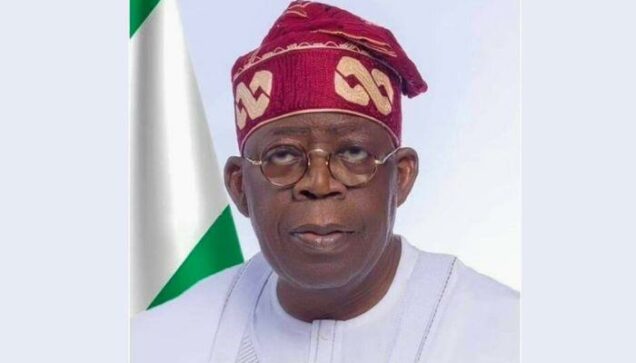
President Bola Ahmed Tinubu has granted presidential pardon to 175 persons, including Nigeria’s foremost nationalist, Herbert Macaulay and former Federal Capital Territory Minister, Maj.-Gen. Mamman Vatsa (rtd), following the approval of the National Council of State at its meeting on Thursday in Abuja.

The decision, taken at the instance of the President’s recommendation based on the report of the Advisory Committee on the Prerogative of Mercy, was presented by the Attorney-General of the Federation and Minister of Justice, Lateef Fagbemi.

The Council also ratified key national appointments and approved the conferment of national honours on 959 Nigerians and friends of Nigeria.

A source at the meeting confirmed that the late nationalist, Herbert Macaulay, and the executed poet-soldier, Mamman Vatsa, were among the major beneficiaries of the clemency.

Members of the Ogoni Nine were also said to be listed among those pardoned.

Macaulay, often hailed as the “father of Nigerian nationalism,” was twice convicted by colonial authorities — first in 1913 for alleged misappropriation of estate funds, and in 1928 in connection with the “Gunpowder Plot” following his Lagos Daily News publication during the Eleko agitation. Both convictions have long been subjects of historical controversy.

Vatsa, who served as Minister of the Federal Capital Territory and was a member of the Supreme Military Council under General Ibrahim Babangida, was executed on March 5, 1986, after a secret tribunal convicted him of treason in connection with an alleged coup attempt.

His trial and execution have remained deeply controversial, with repeated public calls for a posthumous pardon.

Briefing journalists at the State House, Abuja, after the Council of State and Police Council meetings, Governor Uba Sani of Kaduna State said the approvals underscored President Tinubu’s commitment to justice reform and humane governance.

“Eighty-two of the inmates were granted full presidential pardon, sixty-five had their sentences reduced, while seven death sentences were commuted to life imprisonment,” he disclosed.

According to him, the gesture is aimed at decongesting correctional facilities and promoting restorative justice, in line with Section 175 of the 1999 Constitution (as amended), which empowers the President to grant pardons, reprieves, or commute sentences.

He said the exercise followed careful recommendations of the Advisory Committee, which considers factors such as age, health, good behaviour, or miscarriage of justice.

Governor Sani also revealed that the Council ratified several key appointments presented by President Tinubu, including Professor Joash Ojo Amupitan (SAN) as Chairman of the Independent National Electoral Commission (INEC) and Dr. Aminu Yusuf as Chairman of the National Population Commission (NPC).

The Council also approved Alhaji Tonge Betara Bularafa as Federal Commissioner representing Yobe State at the NPC.

Imo Governor Hope Uzodinma, who chairs the Progressive Governors’ Forum (PGF), described Amupitan’s appointment as “a constitutional responsibility diligently discharged by the President,” adding that the nominee was “a serious-minded scholar, a man of integrity, tested and trusted, who has never participated in partisan politics.”

In another major decision, the Council approved President Tinubu’s request to confer national honours on 959 eminent individuals for the 2024–2025 cycle.

Permanent Secretary, Cabinet Affairs Office, Dr. Emanso Umobong, who briefed journalists on the development, said the awards included 824 successful applications and 135 special recognitions.

She explained that the reconstituted National Honours Award Committee, chaired by the Emirates of Lafia, Justice Mohammed Sidi Bage, had screened over 5,000 applications before submitting its final recommendations.

Among those honoured or set to be honoured are Bill Gates for contributions to public health and humanitarian causes, Uncle Sam Amuka-Pemu, veteran journalist and publisher, and Professor Mahmood Yakubu, immediate past INEC Chairman, for service to Nigeria’s democratic process.

Posthumous honours also went to the Ogoni Nine and the Ogoni Four for their environmental activism and sacrifice, while the Super Falcons and D’Tigresses received national recognition for their excellence in sports.

Meanwhile, the Minister of Police Affairs, Ibrahim Gaidam, also disclosed that he presented proposals to the Police Council for strengthening the Nigeria Police Trust Fund (NPTF).

He sought approval to repeal and reenact the NPTF Establishment Act 2025 to remove its six-year lifespan limitation and make it a permanent agency.

He further proposed an increase in the statutory deduction from the Federation Account from 0.5 percent to 2 percent, aimed at expanding funding for police training, welfare, logistics, technology, and emergency response systems.

The Minister said Council approved an increment to 1 percent of the deduction from the Federation Account.

According to him, all the proposals, including the repeal and reenactment of the NPTF Act, received the Council’s full approval.

“The purpose of establishing the Nigerian Police Trust Fund was to support training and retraining of police personnel. The second one is to provide financial resources to enhance police equipment, logistics, and infrastructure.

“It was established also to support modernization of the police through investments in technology, vehicles, communications, and crime fighting tools, improve welfare and morale of police personnel, promote accountability, transparency, and governance, also to enhance crime prevention and public safety, strengthen capacity for emergency response and disaster management, fund ongoing training, specialized courses, and skill development, foster public-sector and private sector engagement, channel contributions through individuals, corporations, and civil society into police enhancement programs.

“The concerns we had in the Police Trust Fund, the sunset close of six years in the current act limits the lifespan of the Nigerian Police Trust Fund, and impedes long-term planning thereby constraining sustainable police reform.

“The deduction of 0.5 percent from the federation account needs to be reviewed upward to two percent of the federation account.

“So we also prayed that the council should approve the repeal and the reenactment of the Nigerian Police Trust Fund Establishment Act 2025 in order to remove the sunset close and transition it into an agency.

“Second, the council to approve 2 percent deduction from the Federation Account. And the last one, direct the Honorable Attorney General of the Federation and Minister of Justice to input all the approvals of the council in the proposed executive bill. All these prayers have been approved without any omission”, he said.

Both meetings, which were chaired by President Tinubu, had high-level attendance.

The Council of State meeting was attended virtually by former Military President Ibrahim Badamasi Babangida (rtd), and former Head of State, General Abdulsalami Abubakar (rtd).

Also in attendance were the President of the Senate, Godswill Akpabio; Speaker of the House of Representatives, Tajudeen Abbas; Secretary to the Government of the Federation, Senator George Akume; state governors, and other statutory members of the Council.

Also in attendance were four former Chief Justices of Nigeria (CJN), including Alfa Belgore, Mahmud Mohammed, Walter Onnogen, and Oluwakayode Ariwoola. (Nation)