
Posted on Leave a comment

Philippine quake death toll rises to 72

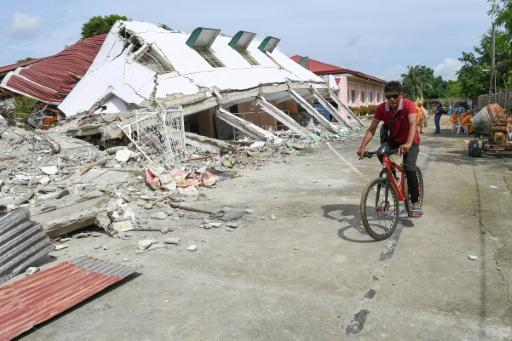
The death toll from a powerful earthquake in the central Philippines rose to 72 on Thursday, rescuers said, as officials turned their efforts to the hundreds injured and thousands left homeless.

Firefighters and rescuers pulled a woman and her child from the rubble of a collapsed hotel overnight Wednesday in the city of Bogo, near the epicenter of the 6.9-magnitude quake that struck on Tuesday.

The body of another woman was also retrieved from the site earlier in the day, AFP journalists saw.

The national government said 294 people were injured and around 20,000 had fled their homes. Nearly 600 houses were wrecked across the north of Cebu island and many are sleeping on the streets as hundreds of aftershocks shake the area.

Cebu provincial governor Pamela Baricuatro made several urgent appeals for help on Thursday, saying thousands needed safe drinking water, food, clothes and temporary housing, as well as volunteers to sort and distribute aid.

“Many homes were destroyed and many families are in need of help to recover… They need our help, prayers and support,” she said on Facebook.

President Ferdinand Marcos flew to Cebu with senior aides on Thursday to inspect the damage and coordinate relief efforts. He did not immediately speak to the press.

A tiny village chapel is serving as a post-quake home for 18-year-old Bogo resident Diane Madrigal and 14 of her neighbors after their houses were destroyed. Their clothes and food are scattered across the chapel’s pews.

“The entire wall (of my house) fell so I really don’t know how and when we can go back again,” Madrigal told AFP. “I am still scared of the aftershocks up to now, it feels like we have to run again.”

Mother-of-four Lucille Ipil, 43, added her water container to a 10-meter line of them along a road in Bogo, where residents desperately waited for a fire truck scheduled to bring them water.

“The earthquake really ruined our lives. Water is important for everyone. We cannot eat, drink or bathe properly,” she told AFP. “We really want to go back to our old life before the quake but we don’t know when that will happen… Rebuilding takes a long time.”

Many areas remain without electricity, and dozens of patients were sheltering in tents outside the damaged Cebu provincial hospital in Bogo.

“I’d rather stay here under this tent. At least I can be treated,” 22-year-old Kyle Malait told AFP as she waited for her dislocated arm to be treated.

More than 110,000 people in 42 communities affected by the quake will need assistance to rebuild their homes and restore their livelihoods, according to the regional civil defense office.

Search and rescue efforts appeared to be winding down in Bogo early Thursday, as rescuers milled around awaiting instructions.

“As of now, all those who were reported missing were already retrieved,” Cebu fire bureau official Liewellyn Lee Quino told AFP.

Rescuers were sent to re-check a collapsed hotel hours after three bodies were retrieved.

“The final check is important so that we can assure the community here that no one is forgotten inside these establishments, and that they can choose to destroy this place completely (for redevelopment),” Quino said.

Earthquakes are a near-daily occurrence in the Philippines, which is situated on the Pacific “Ring of Fire”, an arc of intense seismic activity stretching from Japan through Southeast Asia and across the Pacific basin.Most are too weak to be felt by humans but strong and destructive quakes come at random, with no technology available to predict when and where they might strike. (JapanToday)
Posted on Leave a comment

More than 800 killed and 2,800 injured after earthquake hits Afghanistan

More than 800 people have been killed and at least 2,800 injured after a 6.0 magnitude earthquake struck Afghanistan, a spokesperson for the country’s Taliban government has said.

Health authorities in the capital Kabul, however, said the numbers could change as they worked to reach remote areas.

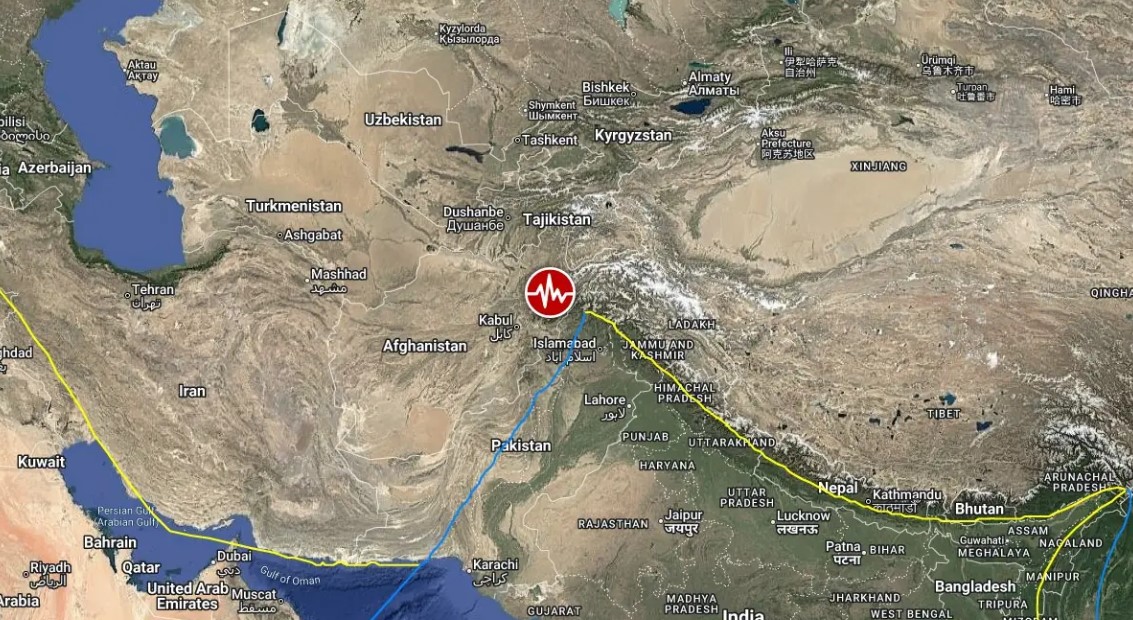
The earthquake struck the country’s northeastern province of Kunar near the Pakistan border at 11.47pm local time (8.17pm UK time) on Sunday, the German Research Centre for Geosciences said.

The quake’s epicentre was near Jalalabad, Nangarhar province, at a depth of 8.7 miles (14km). Jalalabad is situated about 74 miles (119km) from Kabul.

There was a second earthquake in the same province about 20 minutes later, with a magnitude of 4.5 and a depth of 6.2 miles (10km). This was later followed by a 5.2 earthquake at the same depth.

“All our… teams have been mobilised to accelerate assistance, so that comprehensive and full support can be provided,” interior ministry spokesperson Abdul Maten Qanee told Reuters news agency, citing efforts in areas from security to food and health.

Homes of mud and stone were levelled by the midnight quake and several villages completely destroyed in Kunar province, officials said.

Rescuers searched for survivors in several districts of the mountainous province where the quake hit.

Images showed helicopters ferrying aid out to the affected, and residents helping soldiers and medics carry the wounded to ambulances.

Footage from Nangarhar province showed people frantically digging through rubble with their hands, searching for loved ones in the dead of night.

Hundreds of injured people have been taken to hospital, a local official said, with figures likely to rise.

Ziaul Haq Mohammadi, a student at Al-Falah University in Jalalabad, was studying in his room at home when the quake struck. He said he was knocked over by the power of the tremor.

“We spent the whole night in fear and anxiety because at any moment another earthquake could happen,” he said.

Zabihullah Mujahid, the Taliban government’s chief spokesman, said: “Sadly, tonight’s earthquake has caused loss of life and property damage in some of our eastern provinces.

“Local officials and residents are currently engaged in rescue efforts for the affected people. Support teams from the centre and nearby provinces are also on their way.”

He added “all available resources will be utilised to save lives”.

According to earlier reports, 30 people were killed in a single village.

“The number of casualties and injuries is high, but since the area is difficult to access, our teams are still on site,” said health ministry spokesperson Sharafat Zaman.

Earlier, an Afghan foreign office spokesperson said “no foreign governments have reached out to provide support for rescue or relief work”.

Later, India said it had delivered 1,000 family tents to Kabul and was moving 15 tonnes of food material to Kunar, with more aid to be sent on Tuesday. A spokesperson for China’s foreign ministry said it was ready to provide disaster relief assistance “according to Afghanistan’s needs and within its capacity”.

UN Secretary General Antonio Guterres said its mission in Afghanistan was preparing to help those in areas devastated by the quake.

Filippo Grandi, the UN High Commissioner for Refugees, described the disaster as “a perfect storm”.

He told Sky News: “It is very tragic. We have very little information as of yet, but already reports of hundreds of people killed and many more made homeless.

“It is a country that is already suffering from a multiplicity of crises – there is a big drought, Iran has sent back almost two million people, Pakistan is trying to do the same with Afghans living there – and of course, it is extremely difficult to mobilise resources because of the Taliban.

“It’s a perfect storm, and this earthquake, likely to have been quite devastating, is just going to add to the misery. So, a strong appeal to all of those who can help.”

Kate Carey, an officer at the UN Office for the Coordination of Humanitarian Affairs (UNOCHA), warned of the risk of landslides due to heavy rainfall in affected areas.

She also said the shrinking of funding for Afghanistan, led by US aid cuts, was hampering the response to the quake.

Ms Carey said: “The actual delivery of response has been badly hit by the funding cuts this year, but also the number of people we have on the ground is much less than we would have had six months ago.” (SkyNews)

Posted on Leave a comment

Myanmar quake toll passes 1,600 as people dig for survivors with bare hands

More than 1,600 people have died following the devastating earthquake in Myanmar, with locals in some areas telling the BBC they had been left to dig through rubble for survivors with their bare hands.

The quake has flattened much of Mandalay – the ancient capital and second-largest city which is home to about 1.5 million people.

An acute lack of equipment, patchy communication networks and wrecked roads and bridges have hampered the search.

Myanmar’s military government or junta, which seized power in 2021, is also no longer in control of much of the country after a four-year civil war against rebel groups and an anti-coup resistance.

Although rescue efforts have been under way since Friday and international aid has begun to enter the country, help is yet to reach the worst-hit areas and ordinary people have been trying to dig survivors out by hand.

Widely shared footage shows two men moving rubble to pry out a young woman trapped between two concrete slabs.

The BBC has spoken to locals who said that people were screaming for help from under the debris.

Rescuers also pulled a woman alive from the wreckage of a 12-storey apartment block in Mandalay some 30 hours after it collapsed, but the Red Cross says more than 90 people may still be trapped there.

In a nearby township, authorities found the bodies of 12 preschool children and a teacher under a building housing a kindergarten.

Cracks and surface distortions to the main highway between the biggest city Yangon, the capital Nay Pyi Taw and Mandalay had caused severe transport disruptions, UN humanitarian agency OCHA said. (BBC)